
How to Inspect a Contractor's Past Work Before Hiring
Inspect a contractor's past work with confidence. Call (833)-439-3727 to compare local providers and avoid costly hiring mistakes.

Learn more about General Contracting for guides, costs, and what to expect.
Compare General Contracting Pros Near You

Enter your ZIP code to compare independent local professionals and request free quotes.
You have a shortlist of contractors, a budget in mind, and a project that needs to get done right. But before you sign anything, there is one step that separates a smooth renovation from a costly disaster: inspecting the contractor's past work. Photos on a website can be staged, and reviews can be cherry-picked. The only way to truly know what a contractor delivers is to see it with your own eyes, talk to the people who lived through the process, and verify the paper trail. Here is a practical, step-by-step guide to doing exactly that.
Start With the Portfolio: Request It and Read It Critically
Every contractor should have a portfolio, but not all portfolios are created equal. When you ask for past work examples, be specific about what you want to see. A folder of glossy before-and-after shots is a start, but it tells you little about the process, the timeline, or the problems that came up along the way. Instead, ask for projects that are similar to yours in scope, budget, and style. If you are remodeling a bathroom, you want to see bathrooms, not just kitchens. If your home is older, ask for projects in older homes where unexpected issues are more likely.
Once you have the portfolio, read it with a critical eye. Look for consistency in quality across multiple projects, not just one showpiece. Check whether the photos include details like trim work, tile alignment, and finish quality. Ask yourself if the projects look complete, or if there are suspicious gaps. A contractor who cannot provide at least three to five recent, relevant examples may not have the experience you need. And if the portfolio only shows new construction when you are renovating an old home, that is a mismatch worth noting.
What to Look for in a Project Portfolio
- Recency: Projects completed within the last two to three years are most relevant.
- Similarity: Projects with similar scope, budget, and home style to yours.
- Detail: Close-up photos of finishes, not just wide shots.
- Variety: A range of projects that shows adaptability, not just one type.
- Contact information: Willingness to share references for the projects shown.
If a contractor hesitates to share references or only provides one, that is a red flag. A confident professional with a solid track record will have no problem connecting you with past clients. And when you do get those references, that is your chance to dig deeper.
Talk to Past Clients: The Questions That Reveal the Truth
References are your best source of unfiltered information, but only if you ask the right questions. A generic "Were you happy?" will usually get a polite yes. Instead, ask about specific aspects of the job that matter to you: timelines, change orders, communication, and how problems were handled. For example, ask: "How did the contractor handle unexpected issues or delays?" and "Were there any change orders, and how were they priced?" These questions reveal whether the contractor is transparent and fair when the inevitable surprises come up.
Also ask about the final walkthrough and punch list. Did the contractor finish everything on the list? How long did it take to resolve outstanding items? And perhaps most importantly, ask whether the client would hire the contractor again. A pause or a qualified answer speaks volumes. If you want a more structured approach, our guide on questions to ask references before hiring a contractor provides a comprehensive list you can adapt.
Remember that references provided by the contractor are likely to be their happiest clients. To get a balanced view, try to find additional reviews on independent platforms, but always take online reviews with a grain of salt. The combination of direct conversations and independent research gives you the clearest picture.
Visit a Finished Job Site: Etiquette and What to Examine
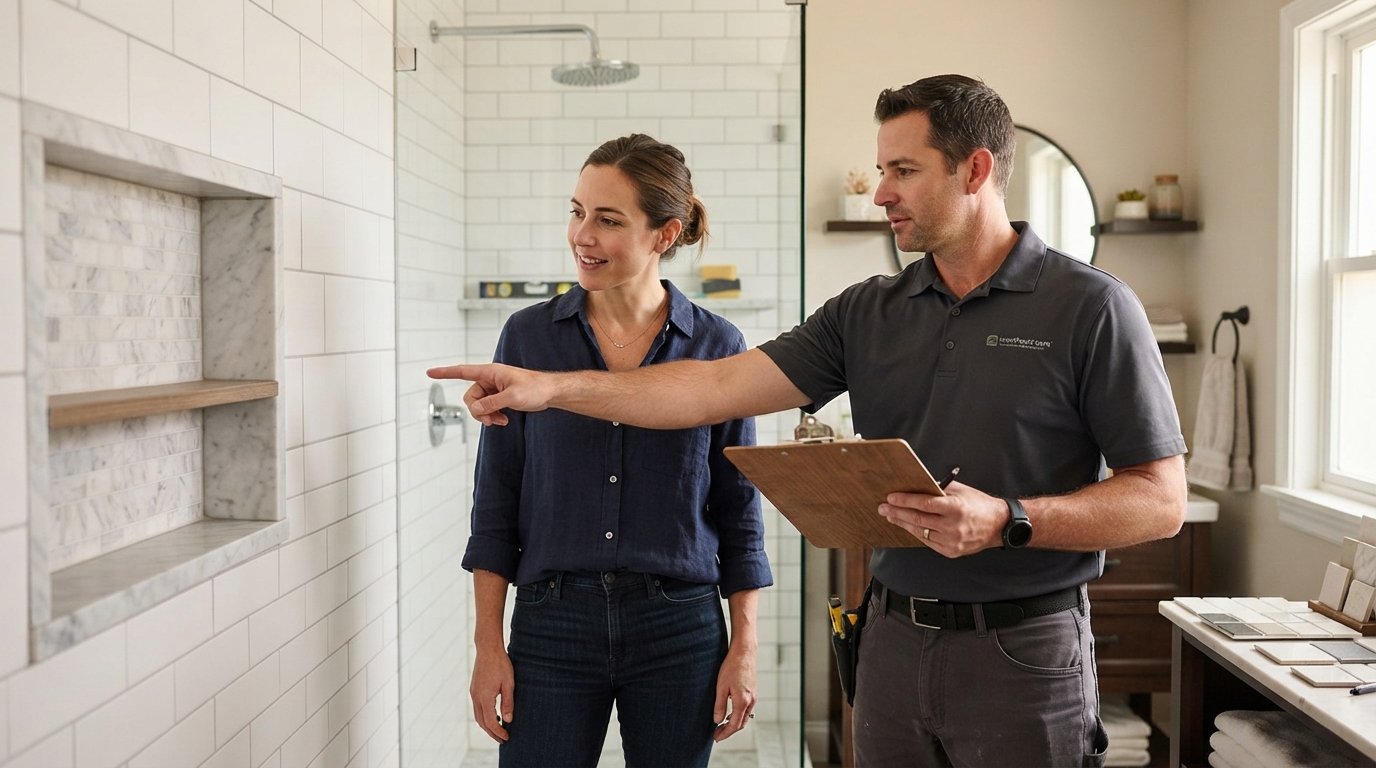
Seeing a completed project in person is the most reliable way to assess workmanship. Ask the contractor if they can arrange a visit to a recent job site where the homeowner is willing to show you around. Respect the homeowner's time and privacy: schedule in advance, keep the visit brief, and do not bring a crowd. When you are there, look beyond the surface. Check the details that are easy to get wrong: the alignment of cabinets and doors, the consistency of tile grout lines, the smoothness of drywall finishes, and the quality of paint edges. Open and close doors and windows to see if they operate smoothly. Look for signs of water damage or poor sealing around fixtures.
If the project is still in progress, you can observe the work in real time, but be careful not to interfere. Ask the contractor to explain what is happening and why. A good contractor will be proud to show off their work and will welcome your questions. If they seem annoyed or defensive, that is a warning sign. Also, pay attention to the job site itself: is it clean and organized? A messy site can indicate a lack of professionalism that may carry over to the finished product.
Site Visit Checklist
- Workmanship: Check straight lines, smooth finishes, and proper alignment.
- Materials: Confirm that the materials used match what was specified.
- Cleanliness: A tidy site suggests a disciplined crew.
- Functionality: Test doors, windows, faucets, and light switches.
- Homeowner feedback: Ask the owner about their experience during the visit.
After the visit, take notes and compare what you saw with what you have seen from other contractors. A single visit may not reveal everything, but it will give you a tangible sense of the quality you can expect.
Verify Licensing, Permits, and Inspection Records
Workmanship is only part of the story. A contractor who does beautiful work but skips permits or lacks proper licensing is a liability. Licensing requirements vary by state and locality, so check with your local building department to understand what is required for your project. Then, ask the contractor for their license number and verify it through the appropriate state or local agency. This step is not about trusting the contractor less; it is about confirming that they are accountable to a regulatory body.
Permits are equally important. A contractor who suggests skipping permits to save time or money is putting you at risk. Permits ensure that the work is inspected by a third party and meets safety codes. Ask to see copies of permits for past projects, and check with the local building department to confirm that inspections were passed. Inspection records are public in many areas, so you can verify that the work was done to code. If a contractor cannot provide permit records, that is a serious red flag.
Finally, ask about insurance. While you should not rely on a contractor's insurance as a substitute for your own due diligence, a legitimate contractor will carry general liability insurance and workers' compensation. Ask for a certificate of insurance and verify it with the insurer. This protects you if something goes wrong on the job.
Use a Matching Service to Simplify the Vetting Process
Finding contractors to inspect can be time-consuming. That is where a free matching service like 180Remodel can help. The platform connects homeowners with independent local providers for a wide range of projects, from roofing and windows to bathroom remodeling and flooring. By submitting your project details, you can receive multiple quotes from providers who have expressed interest in your job. This gives you a starting point for your inspection process. However, remember that a matching service does not perform the work or guarantee quality; you still need to do your own due diligence by following the steps outlined here.
Bring It All Together: Making the Final Decision
After you have reviewed portfolios, talked to references, visited job sites, and verified credentials, you will have a much clearer picture of each contractor's strengths and weaknesses. Create a simple scorecard to compare them objectively. Rate each contractor on workmanship, communication, transparency, and professionalism. Consider not just the price, but the value they bring. A slightly higher bid from a contractor with a proven track record of clean, code-compliant work is often the better investment.
Trust your instincts, but let the evidence lead. If something feels off during the inspection process, it probably is. A contractor who is evasive about references, defensive about questions, or unable to provide documentation is not worth the risk. On the other hand, a contractor who welcomes scrutiny and provides clear answers is likely to be a reliable partner for your project.
Inspection is not about finding perfection; it is about identifying competence, honesty, and accountability. By taking the time to inspect a contractor's past work thoroughly, you protect your home, your budget, and your peace of mind.