
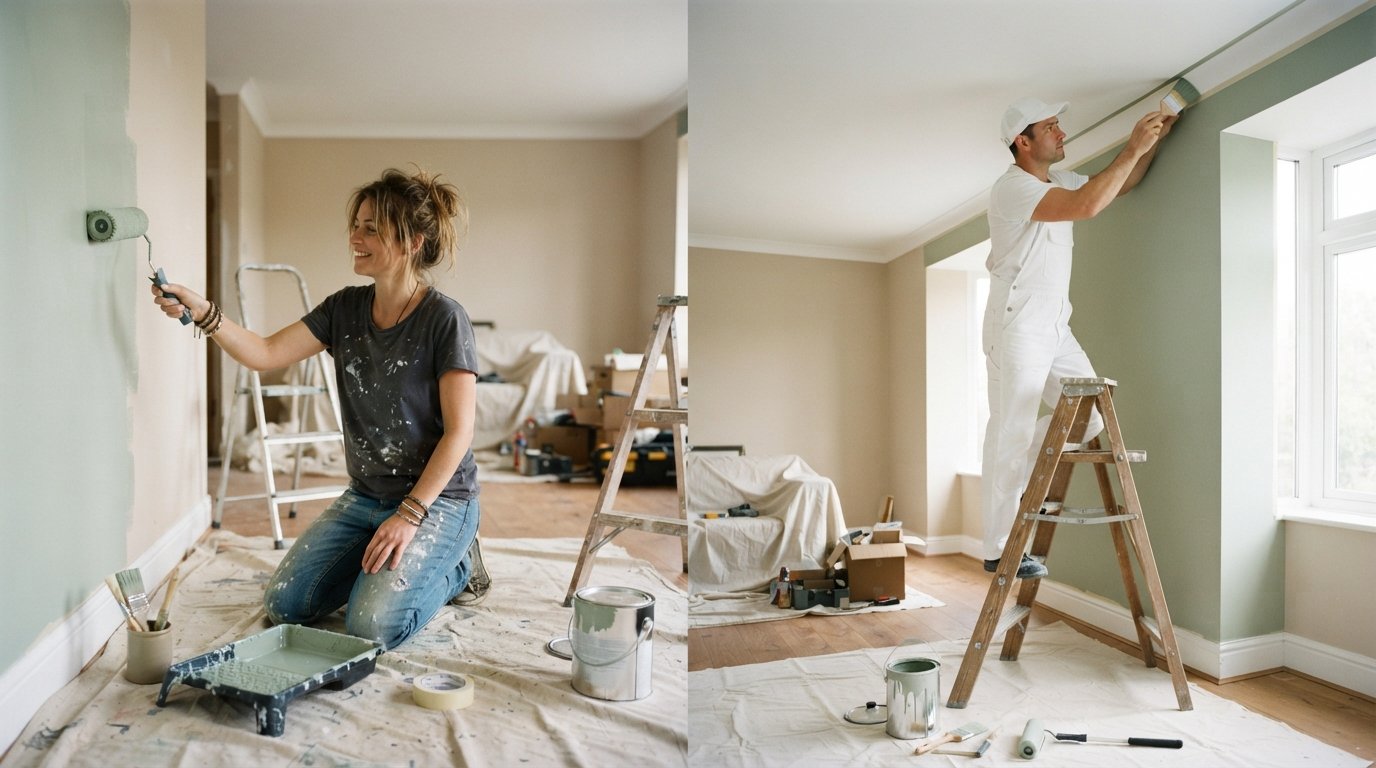
DIY versus Hiring a Pro for Interior Painting: Which Saves More?
Compare DIY versus hiring a pro for interior painting with real costs, timelines, and finish quality. Call (833)-439-3727 for free local painter estimates.

By Quinn Keller
Learn more about Interior Painting for guides, costs, and what to expect.
Compare Interior Painting Pros Near You

Enter your ZIP code to compare top-rated local professionals and request free quotes.
Your living room walls are looking tired, and you have a weekend free. Should you grab a roller and a can of paint, or call in a professional? The choice between doing it yourself and hiring an interior painter looks simple on the surface, but the real answer depends on your time, skills, and tolerance for imperfect edges. This guide breaks down the DIY versus hiring a pro for interior painting debate with real costs, timelines, and risk factors so you can decide with confidence.
The Real Cost of DIY Interior Painting
At first glance, DIY painting feels almost free. You buy a gallon of paint, a roller, a brush, and some tape, and you are ready to go. But the true cost includes more than the paint can. For a standard 12 by 15 foot room with eight foot ceilings, you will need roughly two gallons of wall paint and one gallon of ceiling paint, plus primer if you are covering dark colors or patching drywall. Add rollers, trays, drop cloths, painter's tape, sanding blocks, caulk, and a decent angled brush, and your material bill often lands between $150 and $300 for a single room. Multiply that across a whole house and the savings shrink fast.
There is also the hidden cost of mistakes. A spilled gallon on carpet, a drippy ceiling line, or a failed tape pull can turn a cheap project into a repair bill. If you value your weekend at even $25 per hour, a two day DIY paint job already carries an opportunity cost of $400 or more. That is why many homeowners who start with the DIY versus hiring a pro for interior painting question end up surprised when they add up every trip to the hardware store.
What a Professional Painter's Bid Actually Covers
A painter's estimate can look high next to a $40 gallon of paint, but that number covers much more than labor. Professional bids typically include surface preparation, patching and sanding, caulking gaps, priming bare or repaired areas, masking floors and furniture, and cleanup. Many crews also move and cover furniture, remove outlet covers, and apply two finish coats with back rolling for even coverage. In other words, you are paying for speed, consistency, and a warranty.
Most interior painting projects are priced either by the room or by square footage of wall space. A standard bedroom often falls in the $300 to $800 range for labor and materials, while larger living areas or rooms with high ceilings can climb higher. Always ask for a written, itemized bid that separates labor from materials so you can compare apples to apples. If a quote seems too low, ask what it excludes, because skipping prep is the most common way to cut corners.
Prep Work and Patching: The Hidden Time Sink
Painting is maybe 30 percent of the job. The rest is preparation, and preparation is where DIY timelines usually fall apart. Nail holes need filling, cracks need caulking, glossy surfaces need deglossing, and stained ceilings may need a stain blocking primer. Each of these steps adds drying time and sanding dust. A professional crew does this work every day and knows exactly how much filler to use and how long to wait before sanding, which is why a room that takes you two weekends can be finished by a pro in a single day.
Ceilings deserve special mention. Cutting in a clean line where the ceiling meets the wall is one of the hardest skills in painting, and overhead work is physically exhausting. If your project includes ceilings, stairwells, or rooms with tall vaulted spaces, the DIY versus hiring a pro for interior painting comparison tilts heavily toward hiring. Falls from ladders and makeshift platforms are a real safety risk, and a professional carries insurance that covers that exposure.
Timeline and Finish Quality: What to Expect
Finish quality is the difference most homeowners notice first. A professional job has crisp cut lines, even sheen, no lap marks, and no visible roller texture. DIY work can look great too, but it requires patience, the right nap roller, and careful back rolling to avoid flashing. If you are painting a low traffic room in a flat finish, small imperfections hide well. In a bathroom or kitchen with semi gloss paint, every lap mark and brush stroke shows under side lighting.
Timelines follow the same pattern. A pro crew can typically prep and paint an average bedroom in one day and a full interior in three to five days depending on size and drying conditions. A first time DIY painter should budget two to three times longer, especially if patching or multiple coats are involved. If you have a move in date, a family event, or a strict weekend window, hiring removes the schedule risk entirely.
Which Rooms and Surfaces Are Safest to DIY
Not every painting project carries the same difficulty. Some spaces are forgiving enough that a careful beginner can get results they are proud of, while others punish inexperience. Before you decide, match the surface to your skill level and the finish you want.
- Low risk DIY: Standard height bedrooms, closets, and hallways with flat or eggshell finish, where small imperfections are hard to see.
- Medium risk DIY: Living rooms and dining rooms with furniture to mask, or walls that need light patching before painting.
- High risk, hire a pro: Bathrooms and kitchens with semi gloss paint, ceilings, stairwells, two story walls, and any surface with heavy staining or water damage.
- Specialty finishes: Limewash, faux finishes, cabinet refinishing, and color blocking all demand technique and are best left to experienced painters.
If your home was built before 1978, test painted surfaces for lead before sanding or scraping. Disturbing lead paint is a health hazard, and safe abatement is a job for a certified professional. For everything else, a simple rule applies: the higher the visibility and the glossier the finish, the more a pro's experience pays off.
Tools, Safety, and the Cost of Getting It Wrong
DIY painting requires more gear than most people expect. You will want a sturdy step ladder, drop cloths for every surface, a pole sander, quality brushes in two sizes, a roller frame with a decent cage, and respirators if you are using oil based or low VOC products in a closed space. Ventilation matters, especially in small rooms, and paint fumes can linger for days. Professional crews arrive with their own equipment, including sprayers and extension poles, which is part of what your bid pays for.
The cost of getting it wrong goes beyond money. A botched paint job can lower the perceived value of a room, and fixing it often means priming and repainting the entire surface, which doubles your material cost. If you are planning a larger renovation, coordinating paint with flooring, trim, and electrical work is much easier when a single professional crew handles the sequence. For homeowners who want help comparing local painters and planning an affordable project, BuySellRemodel connects you with experienced contractors and free estimates so you can move forward with confidence.
DIY versus Hiring a Pro for Interior Painting: A Simple Decision Framework
When the debate feels stuck, run your project through a short checklist. Ask yourself how many rooms are involved, how tall the ceilings are, whether repairs are needed, and how soon the job must be finished. Then weigh your answers against the following factors.
- Time: If you cannot dedicate full weekends for two to three weeks, hire. Pros finish faster and clean up as they go.
- Skill: If the job includes ceilings, stairwells, or gloss finishes, hire. These are the surfaces where experience shows most.
- Budget: If materials alone would cost more than half of a professional bid, the savings from DIY are too small to justify the risk.
- Stress: If the thought of moving furniture and living in dust for a month makes you anxious, the peace of mind from hiring is worth the premium.
For a detailed room by room comparison of costs and outcomes, our guide on interior painting: DIY or hire a pro walks through real numbers and finish expectations. The takeaway is consistent: DIY works best for small, simple, low visibility spaces, while hiring wins for large, high visibility, or time sensitive projects.
How to Hire the Right Interior Painter Without Overpaying
If you decide to hire, the next step is finding a contractor you trust. Start by requesting at least three written estimates that itemize labor, materials, prep work, and cleanup. Ask each painter how many coats they apply, whether they prime bare drywall, and what kind of paint they use. Check for a current license if your state requires one, ask for proof of insurance, and read recent reviews from local homeowners. A reputable painter will happily answer these questions and provide references.
Schedule the work in writing, including start and finish dates and a payment schedule that holds back a portion until the final walkthrough. Walk the rooms with the crew before they start to confirm colors and finishes, and do a final inspection in daylight to catch any missed spots. When you hire through a vetted network, you skip much of this guesswork. HomeReModelingsContractors.com helps homeowners plan affordable projects and connect with experienced local contractors, from free estimates to full remodels, so the right pro is easier to find and the job gets done right.
The best painting decision is the one that matches your skills, schedule, and budget, not the one that looks cheapest on paper. Small bedrooms and closets are great places to build confidence with a roller. Ceilings, stairwells, and high gloss surfaces are worth every dollar a professional charges. Whichever route you choose, plan the prep, protect your floors, and leave enough drying time between coats. Your walls will reward the patience.