
How to Choose a Kitchen Faucet That Lasts for Years
Learn how to choose a kitchen faucet that lasts by focusing on valves, materials, and fit. Call (833)-439-3727 for free quotes on installation.

By Quinn Keller
Learn more about Sink or Faucet Installation or Replacement for guides, costs, and what to expect.
Compare Sink or Faucet Installation or Replacement Pros Near You

Enter your ZIP code to compare independent local professionals and request free quotes.
A kitchen faucet is one of the most frequently used fixtures in your home, and a cheap one can turn into a recurring headache. Dripping, wobbly handles, peeling finishes, and failed sprayers are common complaints that often trace back to a rushed purchase. If you want to avoid replacing the same faucet every few years, it pays to understand what separates a durable model from a disposable one. This guide walks you through the materials, valve types, features, and fit considerations that determine longevity, so you can spend once and enjoy reliable performance for a decade or more.
Start With the Valve: The Heart of a Long-Lasting Faucet
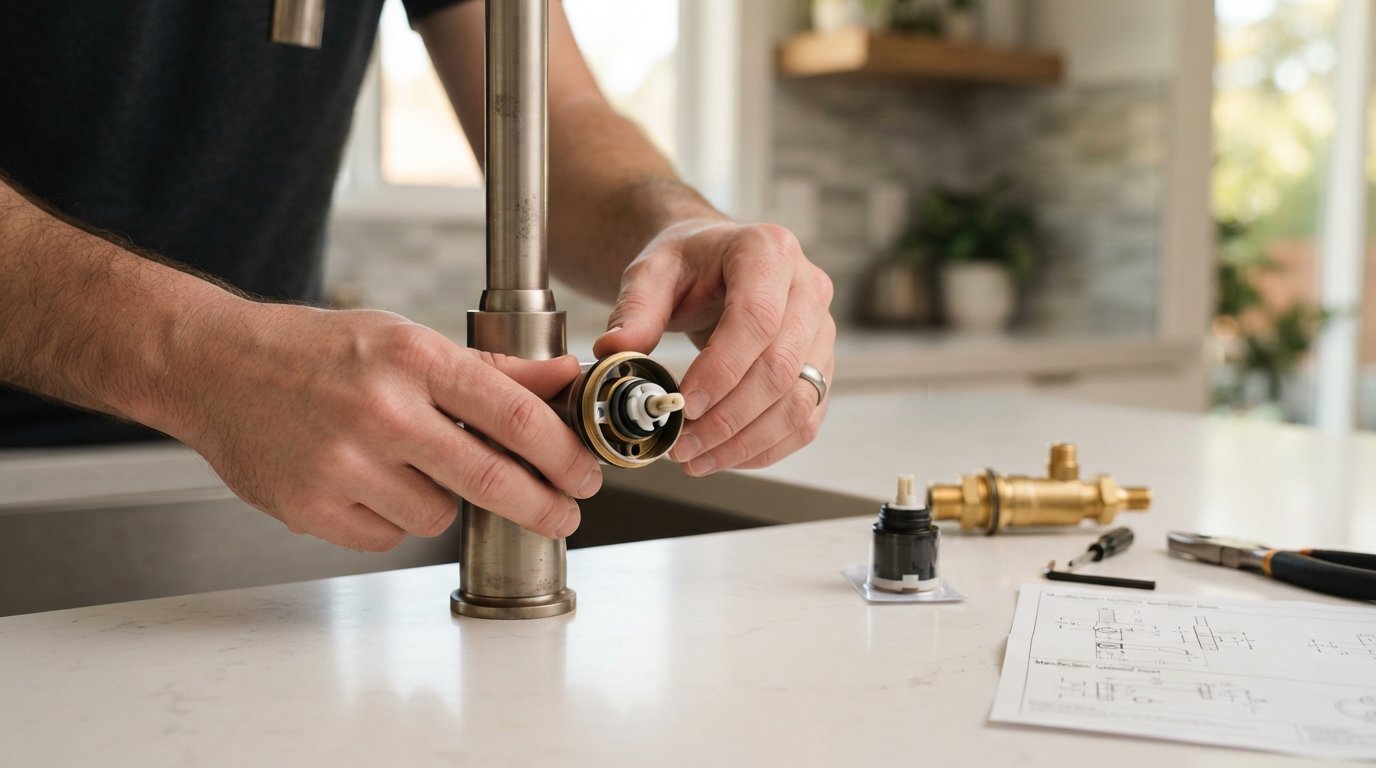
The valve cartridge is the mechanism that controls water flow and temperature, and it is the single most important component for durability. A poor-quality valve wears out quickly, leading to leaks and stiff handles. There are three main types: ceramic disc, ball, and compression. Ceramic disc valves are the most durable and resistant to wear, which is why they are common in better-quality faucets. Ball valves are simpler and found in many budget models, but they can develop leaks over time. Compression valves are the oldest design and are more prone to wear, though they are still used in some utility faucets.
When shopping, look for a faucet that specifies a ceramic disc cartridge or a high-quality ceramic mixing valve. Many manufacturers offer a limited lifetime warranty on the cartridge, which is a good indicator of confidence in the part. If the product description does not mention the valve type, that is often a sign of a lower-grade product. A durable valve also contributes to smooth operation, so you will appreciate the difference every time you turn the handle.
Another consideration is the availability of replacement parts. Even the best valve may eventually need a new cartridge, and a faucet from a brand with readily available parts will be easier to repair. Before buying, check whether the manufacturer sells replacement cartridges and how easy they are to find. A faucet that cannot be repaired is destined for the landfill, no matter how sturdy it feels on day one.
Materials and Finishes That Hold Up to Daily Use
The body of the faucet is typically made from brass, zinc, or plastic. Solid brass is the gold standard for durability and corrosion resistance, though it is often used in higher-end models. Zinc alloy is common in mid-range faucets and can be durable if properly coated, but lower-quality zinc can corrode or crack over time. Plastic bodies are generally found in very inexpensive faucets and are best avoided if longevity is a priority. A magnet can help you test: brass is not magnetic, while many zinc alloys are. However, some manufacturers use brass with a zinc coating, so the magnet test is not foolproof.
Finishes are another area where quality varies widely. A finish that is applied properly will resist tarnishing, peeling, and scratching for years. PVD (physical vapor deposition) finishes are among the most durable and are often used on high-end faucets. Chrome is also durable and easy to clean, while brushed nickel and stainless steel are popular for their ability to hide fingerprints. Avoid finishes that are described as painted or lacquered, as these tend to chip and flake over time. If you have hard water, a finish that resists water spots will save you cleaning time and keep the faucet looking new.
It is also worth considering the internal waterways. A faucet with brass waterways is less likely to leach contaminants and will resist corrosion better than plastic or low-grade metal. Some manufacturers use a plastic liner inside a metal body, which can be a weak point. Look for specifications that mention brass or copper waterways for added peace of mind.
Spray Heads, Pull-Down, and Touchless Features: Are They Worth It?
Modern faucets come with a range of features, and some add convenience while others add complexity that can become a failure point. Pull-down and pull-out spray heads are extremely popular because they make rinsing and filling large pots easier. A high-quality pull-down faucet uses a durable hose and a magnetic or weighted docking system. Cheaper models may have a flimsy hose that kinks or a dock that stops holding the spray head securely. If you choose a pull-down, look for a braided nylon or stainless steel hose and a robust docking mechanism.
Touchless faucets use a sensor to turn water on and off, which can be handy when your hands are messy. However, these faucets rely on electronics and batteries or a power adapter. The sensor and solenoid can fail over time, and repairs may be more costly than with a manual faucet. If you want touchless convenience, choose a model from a reputable brand with a good warranty on the electronic components. Also consider whether the faucet can be used manually if the sensor fails, so you are not left without water.
Spray head settings are another feature to evaluate. Multiple spray patterns (stream, spray, pause) are useful, but the mechanism that switches between them should feel solid. A flimsy diverter button can break or stick. Test the faucet in person if possible, or read owner feedback about the durability of the spray head. Remember that more features mean more parts that can fail, so prioritize the ones you will actually use.
Matching the Faucet to Your Sink and Water Pressure
Before you fall in love with a faucet, make sure it fits your sink. The number of holes in your sink or countertop dictates the type of faucet you can install. A single-hole faucet requires one hole, while a centerset or widespread faucet needs three. If you have a four-hole configuration, you may need a faucet with a side sprayer or a deck plate to cover the extra hole. Measure the distance between the holes and the thickness of your countertop to ensure the faucet will mount properly. Also check the spout height and reach: a tall spout is great for filling pots, but it may not fit under low cabinets or a window sill.
Water pressure also plays a role in faucet performance and longevity. Most homes have water pressure between 40 and 80 psi. If your pressure is on the high side, a faucet with a pressure-compensating aerator will help prevent splashing and reduce strain on the valve. High pressure can wear out valves faster, so a pressure-reducing valve on the main line might be a worthwhile investment. Conversely, low pressure can make some faucets feel weak, so look for models designed for low-pressure systems. If you are unsure about your pressure, a simple gauge that attaches to a hose bib can give you a reading.
Another fit consideration is the direction of the handle. A single-handle faucet is convenient for quick temperature adjustments, but if your sink is in a corner, you may need a handle that operates from the front or side. Consider your daily routine and how you use the sink to choose a configuration that feels natural and reduces strain on the mechanism.
Installation and Replacement Costs to Budget For
Even the most durable faucet needs proper installation to perform well. If you are replacing an old faucet, the total cost involves the faucet itself plus labor if you hire a professional. Installation typically takes one to two hours for a standard replacement, but complications like corroded fittings or a stuck old faucet can add time. If you are adding a faucet where there was none, you may need plumbing modifications, which increases the cost. It is wise to get quotes from independent local providers to understand the going rate in your area. You can use a service like HomeRemodelingsContractors.com to compare quotes from independent local providers at no obligation.
When budgeting, do not forget potential extras: a new supply line, a deck plate, or a soap dispenser. These small items add up. If you are remodeling your kitchen, you may also want to coordinate the faucet installation with other plumbing work. For larger projects, it helps to know how to choose kitchen remodeling contractors who can handle the entire scope. Our guide on how to choose kitchen remodeling contractors offers practical tips for finding the right professional.
If you are also considering energy-efficient upgrades, such as a solar water heater or solar panels, you might explore resources like FreeSolarPowerQuotes to learn about options and compare quotes. While a faucet itself does not directly tie to solar power, reducing your overall energy costs can free up budget for quality fixtures.
Practical Steps to Evaluate Durability Before You Buy
With so many models on the market, it helps to have a systematic approach. Here is a simple framework to evaluate a faucet's likely lifespan:
- Check the valve type. Ceramic disc is best; avoid unknown or unlisted valve types.
- Inspect the body material. Solid brass is ideal; zinc alloy can be acceptable if well-coated; avoid plastic.
- Review the finish. PVD or chrome are durable; painted finishes are not.
- Look at the warranty. A limited lifetime warranty on parts and finish is a strong signal.
- Read the fine print. Some warranties exclude labor or have conditions that limit coverage.
Beyond these steps, consider the brand's reputation for customer service and parts availability. A faucet from a company that stands behind its product and offers easy replacements is a safer bet. Also, check whether the faucet meets relevant standards, such as NSF/ANSI 61 for drinking water safety and ASME A112.18.1 for plumbing fixtures. These certifications indicate the product has been tested for safety and performance.
Finally, think about your water quality. If you have hard water, you may want a faucet with a ceramic cartridge that resists mineral buildup. A water softener can also extend the life of your faucet and other plumbing fixtures. If you are unsure about your water hardness, a simple test kit can tell you. Addressing water quality upfront can prevent scale buildup that leads to premature failure.
Common Mistakes That Shorten Faucet Life
Even a well-chosen faucet can fail early if it is installed or used incorrectly. Overtightening connections can crack fittings, while undertightening can cause leaks. Using excessive force on the handle can damage the cartridge. Neglecting to clean the aerator can lead to reduced flow and strain on the valve. And ignoring small leaks can cause corrosion and water damage. Proper installation by a qualified professional and routine maintenance will help you get the most from your investment.
Another mistake is choosing a faucet based solely on looks. A stylish faucet with a poor valve or flimsy spray head will not last, no matter how good it looks in the showroom. Balance aesthetics with durability. Also, do not assume that a higher price always means better quality; research the specific components and warranty. Sometimes a mid-priced faucet from a reputable brand outperforms a flashy high-priced model with unknown internals.
When in doubt, consult a plumbing professional. They can advise on the best faucet for your water conditions and usage habits. If you are planning a larger kitchen upgrade, connecting with independent local providers through a free matching service can simplify the process. HomeRemodelingsContractors.com connects homeowners with independent local providers for a variety of projects, and you can request quotes with no obligation.
Choosing a kitchen faucet that lasts is about focusing on the parts you cannot see as much as the ones you can. Prioritize a quality valve, solid materials, and a durable finish, and make sure the faucet fits your sink and water pressure. With a thoughtful approach, you can avoid the cycle of frequent replacements and enjoy a reliable faucet for many years.