
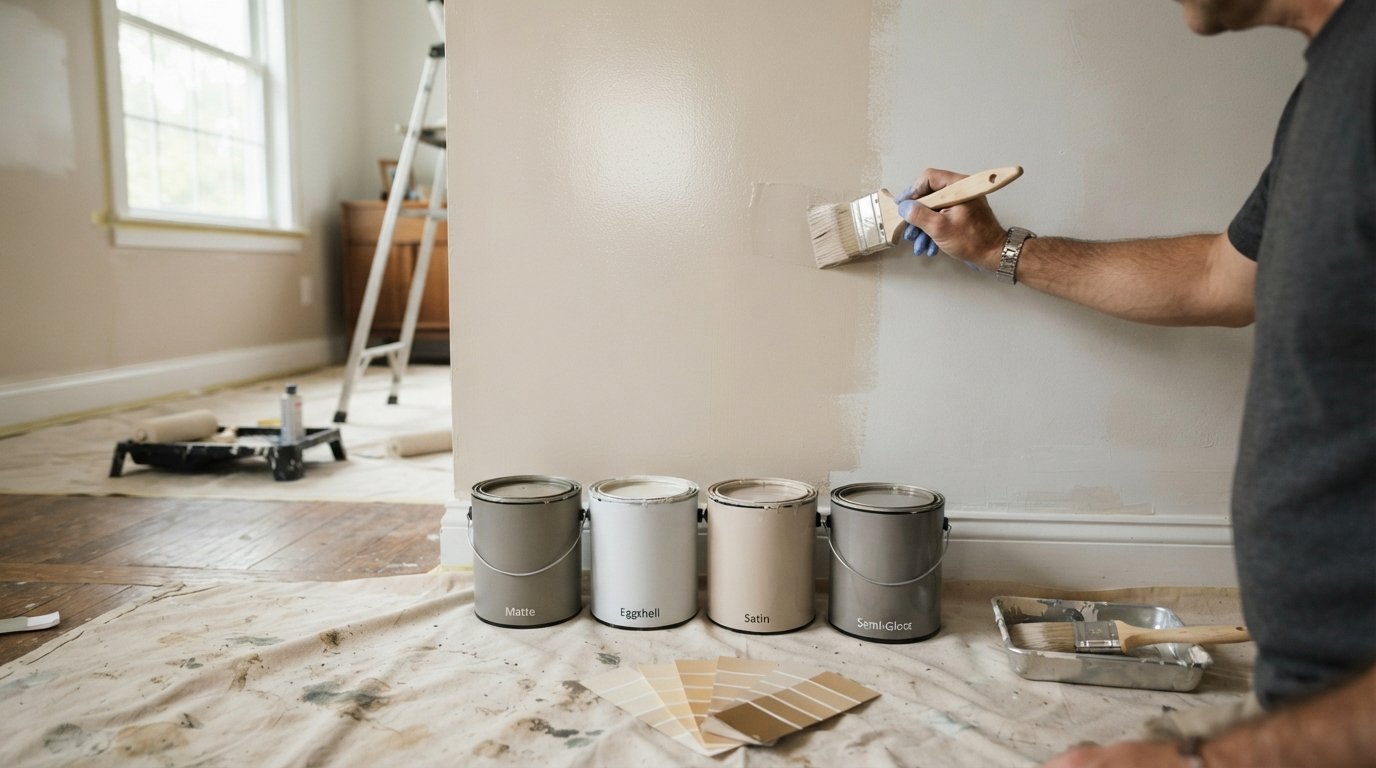
Choosing Paint Sheen by Room: Durability and Cleanup Guide
Master choosing paint sheen for each room durability and cleanup with our room-by-room guide. Call (833)-439-3727 for expert painting advice.

By Sarah Thomas
Learn more about Interior Painting for guides, costs, and what to expect.
Compare Interior Painting Pros Near You

Enter your ZIP code to compare top-rated local professionals and request free quotes.
You have picked the perfect color, but the finish you choose will determine how that color holds up to daily life. Paint sheen is not just a cosmetic detail; it directly affects durability, scrub-ability, and how often you will need to repaint. Walk into any paint store and you will face a wall of options: matte, eggshell, satin, semi-gloss, and gloss. Each has a distinct personality and a best-fit room. This guide breaks down choosing paint sheen for each room durability and cleanup so you can make a confident choice that saves time and money.
Understanding Paint Sheen: What It Is and Why It Matters
Sheen refers to the amount of light a painted surface reflects. Flat or matte paints absorb light, while glossier finishes bounce it back, creating a subtle shine. That reflectivity is tied to the resin content in the paint. More resin means a harder, smoother film that resists moisture and stains but also highlights surface imperfections. Less resin gives a softer, flatter look that hides flaws but scuffs more easily.
The practical trade-off is simple: higher sheen equals higher durability and easier cleaning, but also more visible wall defects and a less forgiving finish during application. Lower sheen equals a velvety appearance that camouflages bumps and patches, but it demands gentler cleaning and may need touch-ups sooner in high-traffic zones.
Before you commit to a sheen, think about the room's function, the amount of traffic it sees, and the condition of the walls. A flawless new drywall job can handle satin with ease, while an older home with patched plaster may look better in matte. Considering these factors upfront is part of smart home improvement planning, and it prevents costly repainting later.
Sheen Types Compared: Durability and Scrub-ability
Paint manufacturers use different names, but the sheen spectrum generally runs from flat to high gloss. Here is how the most common finishes stack up on durability and cleanability, which are the two factors that matter most for busy households.
- Matte (Flat): Lowest sheen, best at hiding imperfections, but the least scrub-able. Gentle spot cleaning only; scrubbing can burnish the surface.
- Eggshell: A soft, low-luster finish that offers a good balance. It withstands light cleaning and is a popular choice for living rooms and bedrooms.
- Satin: Noticeably more reflective and more durable. It stands up to repeated wiping and is a workhorse for hallways, family rooms, and kids' spaces.
- Semi-Gloss: Highly resistant to moisture and stains. Easy to scrub, making it ideal for kitchens, bathrooms, and trim.
- Gloss: The toughest and shiniest option. It showcases flaws but delivers maximum scrubbability for doors, cabinets, and high-touch accents.
Scrub-ability ratings from manufacturers (often expressed as scrub cycles) can guide you, but real-world performance also depends on paint quality. A premium matte may outperform a budget satin in some cases, so do not shop by sheen alone. Combine sheen with a reputable brand and proper surface prep for the best results.
Matching Sheen to Each Room
Every room has a unique rhythm of use, moisture, and traffic. Choosing paint sheen for each room durability and cleanup means aligning the finish with those conditions. Here is a room-by-room playbook that balances looks with longevity.
Kitchens
Kitchens are grease, steam, and splatter zones. Walls near the stove and sink collect a fine film that needs regular wiping. Semi-gloss is the traditional recommendation because it resists moisture and cleans easily. However, satin has improved dramatically and now offers ample scrubbability with a softer look. Reserve semi-gloss for backsplashes and trim, and consider satin for the main walls if you prefer a less shiny appearance. Avoid matte in cooking areas unless you are prepared to repaint sooner.
Bathrooms
Humidity is the enemy in bathrooms, and mold and mildew can take hold on poorly sealed surfaces. Semi-gloss or high-quality satin is the safest bet for walls. Both resist moisture penetration and can be wiped down with mild cleaners. For ceilings, a mold-resistant matte or eggshell designed for bathrooms works well and reduces glare. If you have textured walls or imperfect patches, satin provides a good middle ground that hides minor flaws while standing up to dampness.
Kids' Rooms and Playrooms
Crayon marks, sticky fingerprints, and the occasional art project gone wrong make durability non-negotiable in kids' spaces. Satin is the sweet spot: it handles repeated cleaning without wearing down and still looks warm and inviting. For accent walls or furniture, semi-gloss can add a playful pop while being easy to wipe. Avoid flat paint on lower walls where little hands reach, or plan to repaint every few years.
Living Rooms and Bedrooms
These are lower-traffic, lower-moisture spaces where appearance often takes priority. Eggshell offers a gentle sheen that is easy to live with and forgiving of minor wall imperfections. Matte is also a strong choice for bedrooms where you want a calm, velvety look and are willing to clean gently. If the room sees heavy use from pets or children, step up to satin for peace of mind.
Hallways, Stairs, and Entryways
These transition zones take a beating from shoes, bags, and constant traffic. Satin or semi-gloss is the practical choice because these finishes resist scuffs and can be scrubbed. The higher sheen also reflects light, which can make narrow hallways feel brighter and more open.
Trim, Doors, and Cabinets
Trim and doors endure more contact than walls, so semi-gloss or gloss is standard. These finishes create a hard, washable surface that stands up to handprints and cleaning products. For cabinets, semi-gloss is popular for its balance of durability and appearance; high-gloss makes a bold statement but shows every imperfection in the substrate.
How Sheen Affects the Appearance of Wall Imperfections
One of the most overlooked aspects of choosing paint sheen for each room durability and cleanup is how the finish interacts with the wall surface itself. Shiny finishes act like a spotlight for flaws. Dents, patches, sanding marks, and uneven texture become more obvious under gloss or semi-gloss because the light reflects at consistent angles across the surface.
Matte and eggshell finishes scatter light, softening the appearance of imperfections. This makes them ideal for older homes, rooms with imperfect drywall, or ceilings with texture. If you are painting a wall that has been patched or repaired, a lower sheen is your friend. Skilled painters often recommend a matte or eggshell finish for ceilings and imperfect walls, reserving higher sheens for trim and areas where durability is paramount.
Surface preparation becomes even more critical when using higher sheens. Any defect you leave behind will be magnified. Taking time to fill, sand, and prime properly before painting will make a glossy finish look professional rather than patchy.
Where Higher Sheen Saves Repainting Costs Over Time
It is tempting to choose a cheaper flat paint for every wall, but that decision can cost more in the long run. High-traffic areas like hallways, kitchens, and kids' rooms often need repainting every few years when coated in flat paint because scuffs and stains cannot be cleaned effectively. Upgrading to satin or semi-gloss in these zones means you can wipe away marks and extend the life of the paint job.
Consider the labor and material costs of repainting a room. If a higher sheen prevents even one repaint over a decade, it pays for itself. This is especially true in rental properties or homes with children and pets. The same logic applies to trim and doors: a durable semi-gloss finish on trim may last twice as long as a flat finish that shows every scuff.
That said, do not default to gloss everywhere. In low-traffic bedrooms, a quality matte or eggshell will perform well and look better. The key is matching sheen to use, not paying for durability you do not need. A professional painter can help you strike that balance, and connecting with experienced local contractors through BuySellRemodel makes it easier to get expert advice and free estimates for your project.
Prepping Walls So the Finish Lasts and Looks Professional
Even the best paint will fail if the surface underneath is not ready. Proper preparation is the foundation of a durable, attractive finish. Here is a step-by-step approach that professional painters use to ensure sheen performs as intended.
- Clean the walls: Grease, dust, and soap residue prevent paint from adhering. Wash with a mild detergent solution and rinse thoroughly, especially in kitchens and bathrooms.
- Repair imperfections: Fill holes and cracks with spackle or patching compound. Sand smooth and wipe away dust. Remember that higher sheens will highlight any remaining flaws.
- Prime appropriately: Use a stain-blocking primer over patches, water stains, or dark colors. Primer also helps paint bond and can reduce the number of topcoats needed.
- Sand between coats: Lightly sanding between coats creates a smoother surface and improves adhesion, which is especially important for semi-gloss and gloss finishes.
- Use quality tools: High-quality brushes and rollers reduce streaks and texture. For glossy finishes, a smooth roller cover and careful technique are essential to avoid lap marks.
If you are not comfortable with prep work or want a flawless result, hiring a professional painter is a wise investment. Many homeowners find that the cost of professional prep and painting is offset by the longevity of the finish and the avoided stress of DIY mistakes.
Making the Final Decision
Choosing paint sheen for each room durability and cleanup does not have to be overwhelming. Start by assessing the room's traffic, moisture, and the condition of the walls. Use the room-by-room guide above as a starting point, then adjust based on your tolerance for cleaning and your aesthetic preferences. When in doubt, eggshell and satin are safe, versatile choices for most living areas, while semi-gloss is the go-to for moisture-prone and high-touch surfaces.
Remember that paint quality and surface prep matter as much as sheen. A premium paint in the right finish, applied over properly prepared walls, will outperform a bargain paint every time. If you want to take the guesswork out of the process, request a free estimate from a local painting contractor. They can evaluate your walls, recommend the best sheen for each space, and deliver a professional finish that lasts. With the right sheen and a little planning, your paint job will look great and stand up to real life for years to come.