
Choosing Durable Kitchen Cabinet Finishes That Resist Wear
Compare painted, stained, laminate, and thermofoil finishes for wear resistance. Call (833)-439-3727 for expert help choosing durable cabinets.

By Ethan Owens
Learn more about Cabinet Refinishing and Repair for guides, costs, and what to expect.
Compare Cabinet Refinishing and Repair Pros Near You

Enter your ZIP code to compare top-rated local professionals and request free quotes.
Your kitchen cabinets face a daily assault: steam from the dishwasher, splatters from the stove, sticky fingers on the drawers, and the occasional accidental bump with a pot. Over time, a finish that looked flawless in the showroom can start to show scratches, peeling, or discoloration. For homeowners planning a remodel, choosing durable kitchen cabinet finishes that resist wear is one of the most important decisions you will make. It affects not only how your kitchen looks but also how much time and money you spend maintaining it in the years ahead. This guide compares the most common finish options, explains where wear hits hardest, and helps you match durability to your household's real-life habits.
The Main Finish Types and How They Handle Wear
When evaluating cabinet finishes, it helps to understand the fundamental differences between painted, stained, laminate, and thermofoil surfaces. Each has distinct strengths and weaknesses when it comes to resisting moisture, abrasion, and impact. Your choice will depend on your budget, your aesthetic preferences, and the level of traffic your kitchen sees.
Painted finishes offer a smooth, seamless look and can be customized to any color. The durability of paint depends heavily on the type of paint used and the application method. Factory-applied conversion varnish or catalyzed lacquer provides a harder, more chemical-resistant surface than standard on-site latex paint. Painted cabinets are generally easy to touch up, but they are more prone to chipping and cracking along edges and joints, especially in high-moisture areas. If you choose painted cabinets, plan for periodic touch-ups and consider a factory finish if your budget allows.
Stained finishes highlight the natural grain of wood and often feature a protective topcoat. The stain itself does not offer much protection; it is the clear topcoat (lacquer, polyurethane, or conversion varnish) that determines wear resistance. Stained cabinets can be more forgiving of minor scratches because the wood tone helps camouflage them, but deep scratches can expose bare wood. Recoating a stained finish is possible but requires careful surface preparation to avoid uneven sheen.
Laminate finishes are made from a thin layer of decorative paper bonded to a core material, typically particleboard or MDF. Laminate is highly resistant to moisture and stains, and it is easy to clean. However, it can chip at edges and corners, and once damaged, it is difficult to repair invisibly. Laminate is a budget-friendly option that works well in low-to-moderate traffic kitchens.
Thermofoil (often called rigid thermofoil or RTF) is a vinyl film applied over an MDF core. It offers a smooth, uniform finish that resists moisture and is easy to wipe down. The main drawback is that thermofoil can peel or delaminate over time, especially near heat sources like ovens or in areas with high humidity. It is also challenging to repair once damaged. Thermofoil is a popular choice for contemporary looks on a budget, but it may not be the best fit for busy family kitchens.
To summarize the durability profiles:
- Painted: Good for customization; prone to chipping; touch-up friendly.
- Stained: Natural look; topcoat determines wear; moderate repairability.
- Laminate: Moisture resistant; can chip; difficult to repair.
- Thermofoil: Moisture resistant; prone to peeling; not easily repaired.
Beyond these four, you may also encounter solid wood with a factory-applied conversion varnish, which is among the most durable options available. The key takeaway is that the application method (factory vs. on-site) and the specific topcoat matter as much as the finish category itself.
Where Wear Hits Hardest: Sinks, Stoves, and Handles
Not all parts of a cabinet door age equally. The areas around the sink, stove, and handles experience the most intense wear. Understanding these hotspots can help you choose a finish that stands up to the specific challenges in your kitchen.
Around the sink is ground zero for moisture damage. Constant splashing, high humidity, and occasional water spills can cause paint to blister, laminate to lift at seams, and thermofoil to peel. If your sink area is prone to moisture, consider finishes with strong water resistance, such as factory-applied conversion varnish or high-pressure laminate. Proper sealing around the sink base is also critical. In our guide on upgrading kitchen cabinets on a budget, we explain how to prioritize upgrades that protect your investment without overspending.
Near the stove, heat and grease are the enemies. Cabinets adjacent to the cooktop can warp, discolor, or become sticky with accumulated grease. Painted finishes may yellow over time, and thermofoil can soften or peel when exposed to high heat. Stained wood with a robust topcoat tends to fare better, but regular cleaning is essential. If you cook frequently, consider a finish that is easy to degrease and resistant to heat, and always use a range hood to minimize airborne grease.
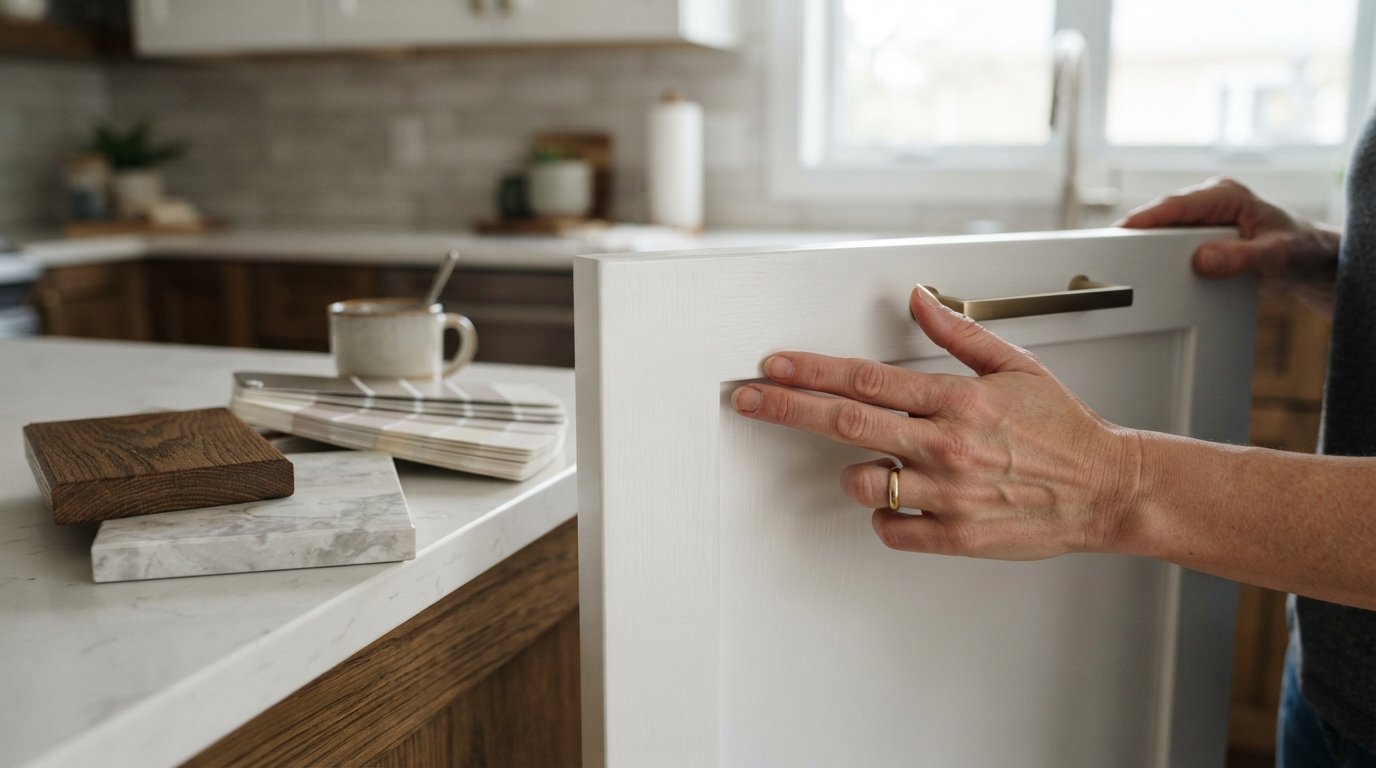
Handles and drawer pulls are touchpoints that endure constant friction. Over time, the finish around handles can wear away, revealing a different color or texture underneath. This is especially common with painted and stained finishes where the topcoat breaks down. To mitigate this, choose hardware that is comfortable to grip and avoid overly abrasive cleaning pads. Some homeowners opt for handle-free designs (push-to-open or integrated pulls) to reduce wear points, but these mechanisms have their own durability considerations.
The table below summarizes the wear hotspots and which finishes perform best:
- Sink area: Moisture resistance is key. Factory conversion varnish and laminate perform well; thermofoil may peel.
- Stove area: Heat and grease resistance. Stained wood with quality topcoat is a good choice; painted may discolor.
- Handles: Abrasion resistance. Factory finishes and laminate resist friction better than on-site paint.
By anticipating these stress points, you can select a finish that not only looks good on day one but continues to perform after years of use.
Touch-Up and Refinishing Options for Each Finish
Even the most durable finish will eventually show signs of wear. Knowing how to repair or refinish each type can extend the life of your cabinets and save you from a full replacement.
Painted cabinets are the easiest to touch up. You can typically sand the damaged area lightly, apply a matching paint, and blend it in. However, achieving a seamless look can be tricky, especially with darker colors or glossy finishes. For larger areas, consider repainting the entire door or drawer front. If you have factory-painted cabinets, order a touch-up kit from the manufacturer to ensure a color match.
Stained cabinets can be refreshed with a new coat of clear finish, but deep scratches may require sanding and re-staining. This is a job best left to a professional if you want a uniform appearance. For minor scratches, a stain marker or wax pencil can camouflage the damage until a more thorough refinishing is possible.
Laminate is difficult to repair invisibly. Small chips can be filled with color-matched putty or laminate repair paste, but the repair will likely be visible. If a large area is damaged, replacing the door or drawer front is often the only practical solution. This is why laminate is best suited for areas where heavy impact is unlikely.
Thermofoil that has peeled or delaminated is notoriously hard to fix. Adhesives may temporarily reattach the film, but the repair is rarely permanent. In many cases, replacing the affected door is the most reliable option. To prevent peeling, avoid exposing thermofoil to high heat and clean with gentle, non-abrasive products.
For any finish, regular maintenance can delay the need for refinishing. Wipe up spills promptly, avoid harsh chemicals, and use a soft cloth for cleaning. If you are unsure about the best approach for your cabinets, consulting a professional can save you time and prevent further damage.
Factory vs. On-Site Finishing: Cost and Durability Trade-Offs
One of the most overlooked factors in cabinet finish durability is where the finish is applied. Factory finishing takes place in a controlled environment with specialized equipment, while on-site finishing is done in your home after installation. The differences in cost and performance are significant.
Factory finishing typically involves spray application of catalyzed lacquers or conversion varnishes in a dust-free booth, followed by controlled curing. This results in a harder, more uniform, and more durable finish that resists moisture, chemicals, and abrasion better than most on-site applications. The cost is often higher upfront, but the longevity can justify the investment. Factory finishes also come with warranties that may cover peeling or cracking.
On-site finishing is generally less expensive and allows for customization and touch-ups during the installation process. However, it is susceptible to dust, humidity, and temperature fluctuations, which can affect the quality of the finish. On-site painted cabinets may require more frequent touch-ups and may not achieve the same level of hardness as factory finishes. If you choose on-site finishing, ensure the contractor uses high-quality products and follows proper curing protocols.
When budgeting for your kitchen remodel, weigh the upfront cost against the long-term durability. Factory finishes may cost 10 to 20 percent more than on-site finishes, but they can last significantly longer and require less maintenance. For a detailed breakdown of cabinet upgrade costs, refer to our guide on kitchen cabinets: upgrade style on a budget. And for homeowners looking to connect with experienced professionals who can help navigate these choices, BuySellRemodel offers free estimates and local contractor connections to make the process smoother.
Matching Finish Durability to Your Household's Use
Every household uses its kitchen differently. A retired couple who cooks light meals will have different durability needs than a family with three young children and a dog. Matching the finish to your lifestyle is key to long-term satisfaction.
For high-traffic family kitchens, prioritize finishes that resist moisture, impact, and frequent cleaning. Factory-applied conversion varnish on stained or painted wood is an excellent choice, as is high-pressure laminate for a more budget-friendly option. Avoid thermofoil if you expect heavy use around the stove and sink. Consider easy-to-clean surfaces and avoid intricate details that trap grease.
For moderate-use kitchens, you have more flexibility. Painted finishes with a quality topcoat can work well if you are diligent about touch-ups. Stained wood offers a timeless look and can be refinished down the road. Laminate remains a practical choice for rental properties or secondary kitchens.
For light-use or showpiece kitchens, aesthetics may take priority. High-gloss painted finishes or exotic wood veneers can be stunning, but they may require more careful maintenance. In these cases, consider the finish's repairability and be prepared for occasional professional touch-ups.
It is also worth considering the long-term maintenance plan. If you are willing to invest time in cleaning and occasional refinishing, a wider range of finishes becomes viable. If you prefer a low-maintenance approach, lean toward factory finishes and moisture-resistant materials.
Finally, think about resale value. Neutral, durable finishes tend to appeal to a broad range of buyers. If you plan to sell in the next few years, choosing a finish that wears well and looks current can be a smart investment. For more guidance on affordable upgrades that add value, explore our kitchen cabinet upgrade tips.
In the end, the best finish for your kitchen is the one that balances durability, cost, and appearance with the realities of your daily life. By understanding the strengths and weaknesses of each option, you can make an informed decision that keeps your kitchen looking great for years to come.