
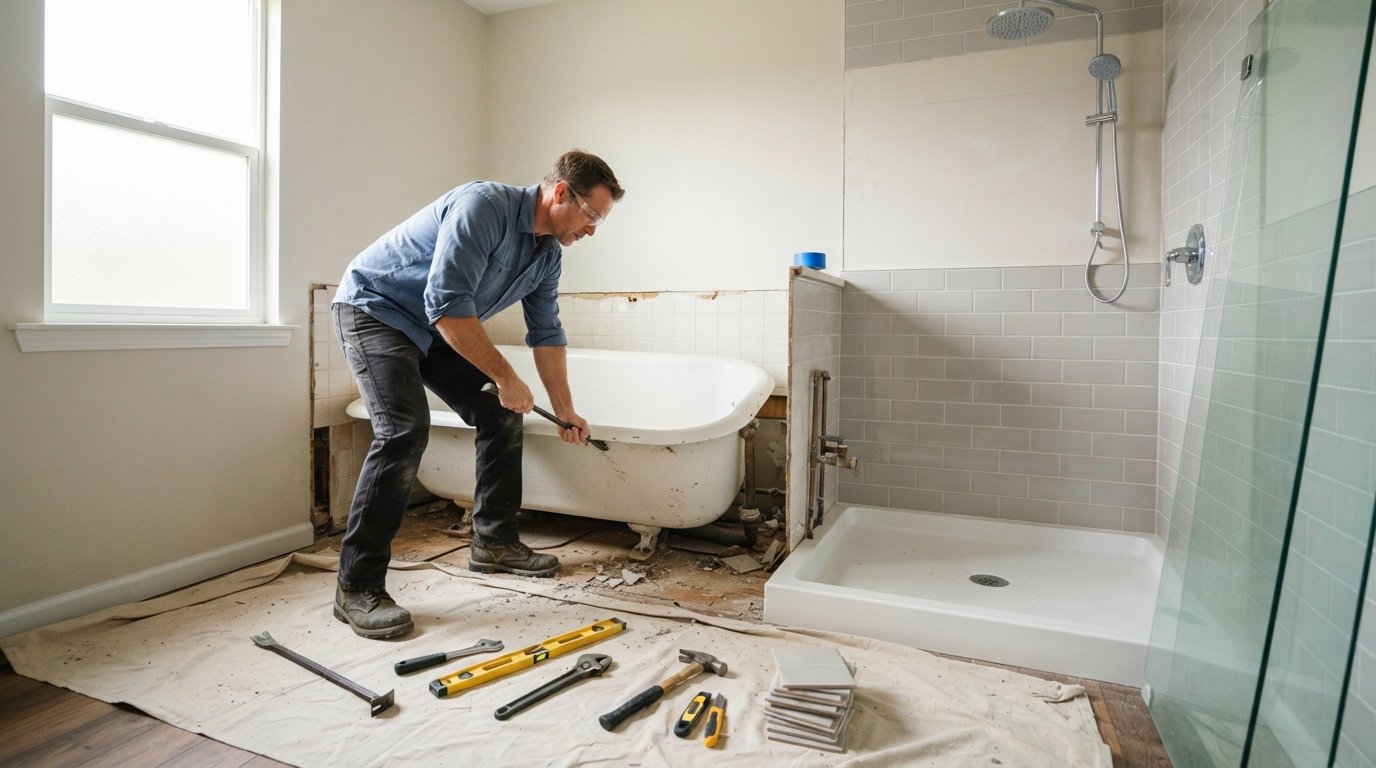
Walk-In Shower Conversion Cost From a Tub: 2026 Guide
Walk-in shower conversion cost from a tub ranges from $3,000 to $15,000. Call (833)-439-3727 for a free estimate and plan your remodel with confidence.

By Sophie Shaw
Learn more about Bathroom Remodel for guides, costs, and what to expect.
Compare Bathroom Remodel Pros Near You

Enter your ZIP code to compare top-rated local professionals and request free quotes.
That old tub takes up space, collects dust, and becomes a bigger hassle every year. Maybe it is hard to step over, or maybe you just want a sleek, modern shower. Whatever the reason, converting a tub to a walk-in shower is one of the most popular bathroom remodels in 2026. But before you grab a sledgehammer, you need to know what it costs. The walk-in shower conversion cost from a tub typically ranges from $3,000 to $15,000, depending on size, materials, and plumbing changes. In this guide, we break down the real numbers, explain what drives the price up or down, and help you plan a conversion that fits your budget and your life.
Typical Cost Ranges for a Tub-to-Shower Conversion
When homeowners ask about the walk-in shower conversion cost from a tub, they usually want a single number. The truth is that the price depends on several factors, including the size of your current tub, the condition of your plumbing, and the materials you choose. On average, a basic conversion using a prefabricated shower pan and acrylic walls starts around $3,000 to $5,000. This includes removing the old tub, rough plumbing adjustments, installing a new pan and walls, and adding a simple showerhead and valve. It does not include high-end tile or custom glass.
If you want a tiled shower with custom waterproofing, a frameless glass door, and upgraded fixtures, the cost can easily reach $10,000 to $15,000. The difference comes down to labor and materials. Tile work alone can add $3,000 to $6,000, while a frameless glass enclosure might cost $1,500 to $3,000. Plumbing relocation, such as moving the drain or supply lines, adds another $1,000 to $3,000. These ranges are for typical 30- to 60-square-foot showers, which fit most standard tub spaces.
It is also important to budget for the unexpected. Older homes often have hidden water damage, outdated plumbing, or insufficient framing. A contractor might discover rot behind the tub surround or a drain that does not meet current code. Contingency funds of 10 to 20 percent of the project cost are wise. To get a precise estimate for your home, request free quotes from local bathroom remodeling contractors. They can assess your specific situation and provide a detailed breakdown.
What Drives the Cost: Plumbing, Waterproofing, and More
The walk-in shower conversion cost from a tub is not just about the visible fixtures. A large portion of the budget goes into the work behind the walls. Plumbing relocation is often the biggest variable. In a typical tub-to-shower conversion, the drain and supply lines are already in roughly the right place, so major changes are not needed. However, if you want to move the showerhead to a different wall, add body sprays, or change the drain location for a linear drain, the plumber will need to reroute pipes. That means opening walls, soldering or gluing new lines, and patching afterward. Each change adds labor and materials.
Waterproofing is another critical cost driver. A tub has a built-in overflow and a surround that often relies on caulk and a lip to keep water in. A walk-in shower requires a fully waterproofed enclosure. That means a shower pan liner or a liquid-applied membrane, plus waterproof backer board or cement board on the walls. Skipping proper waterproofing leads to mold and structural damage, so this is not a place to cut corners. A proper waterproofing system costs $500 to $1,500 in materials and adds a day or two of labor. It is worth every penny.
Other factors include the condition of your subfloor and walls. If the old tub was set in a mortar bed, removing it can damage the floor. If the walls are not plumb or the framing is compromised, the contractor may need to make repairs before installing new materials. These surprises can add $500 to $2,000. Finally, permits and inspections vary by location. Some municipalities require a permit for plumbing changes and electrical work, which can cost $100 to $500. Always factor these into your budget.
Accessibility Features Worth Adding During Conversion
For many homeowners, the main reason to convert a tub to a walk-in shower is accessibility. Aging in place, limited mobility, or simply the desire to avoid stepping over a high tub wall makes a walk-in shower appealing. If that is your goal, there are several features worth adding during the conversion that can improve safety and comfort without blowing the budget. These features also add value to your home and make the shower more usable for everyone in the family.
Here are the most valuable accessibility upgrades to consider:
- Zero-threshold entry: A curbless shower eliminates the step entirely, making it wheelchair or walker accessible. This requires modifying the floor framing and often relocating the drain, adding $1,500 to $3,000 to the project.
- Grab bars: Install them in the shower and near the entry. Modern grab bars come in stylish finishes and can be integrated into the design. Cost: $100 to $300 per bar installed.
- Built-in bench or seat: A fold-down teak or plastic seat, or a tiled bench, provides a safe place to sit. Cost: $300 to $1,500 depending on material and complexity.
- Handheld showerhead: A slide bar with a handheld unit offers flexibility and easier rinsing. Cost: $150 to $400.
- Non-slip floor tiles: Choose tiles with a high coefficient of friction or apply an anti-slip treatment. Cost: similar to standard tiles, $5 to $15 per square foot.
These features not only make the shower safer but also can be designed to look seamless and stylish. For example, a linear drain and curbless entry create a clean, modern look that appeals to buyers of all ages. If you are planning to age in place, investing in these upgrades now is far cheaper than a future remodel. Many contractors specialize in accessible bathroom design and can recommend the best layout for your space.
Tile, Pan, and Glass Options by Budget
The materials you choose have a huge impact on the walk-in shower conversion cost from a tub. You can go with a budget-friendly prefabricated acrylic surround or splurge on natural stone and custom glass. Understanding the options helps you prioritize where to spend and where to save. Here is a breakdown of common material choices by budget level.
Budget-friendly (under $5,000 total): Prefabricated shower pans and wall surrounds made of acrylic or fiberglass. These come in standard sizes and are quick to install, reducing labor costs. They are easy to clean and durable, but they may look less upscale. A basic glass door or curtain completes the look. This is a good option for rental properties or quick flips.
Mid-range ($5,000 to $10,000): A tiled shower with a prefabricated pan or a tiled pan with a waterproofing membrane. Porcelain or ceramic tiles offer a wide range of styles at $3 to $10 per square foot. A semi-frameless glass door adds a modern touch. This is the most popular range for homeowners who want a custom look without the highest price tag.
High-end ($10,000 to $15,000+): Full custom tile work with natural stone or large-format porcelain, a linear drain, frameless glass enclosure, and premium fixtures. This includes designer touches like a niche, bench, and multiple showerheads. The labor and materials are top-tier, but the result is a spa-like retreat that can increase home value.
Remember that labor costs are often 50 to 70 percent of the total project. Installing large-format tiles or intricate patterns takes more time, so the material savings might be offset by higher labor. Always get a detailed quote that separates materials and labor so you can compare options fairly. For more guidance on remodeling costs, you can explore our attic conversion cost guide to see how different projects compare.
Getting Local Bathroom Remodeling Estimates Before Demolition
Before you swing a hammer, you need a clear plan and a realistic budget. The best way to avoid surprises is to get multiple estimates from local bathroom remodeling contractors. A professional can assess your existing plumbing, check for code requirements, and recommend the best materials for your space. They can also spot potential issues that a DIYer might miss, such as a weak subfloor or outdated wiring.
Start by requesting free quotes from at least three contractors. Provide them with your goals and budget range, and ask for a detailed proposal that includes a line-item breakdown. This allows you to compare apples to apples. Be wary of bids that are significantly lower than others, as they may cut corners on waterproofing or permits. A reputable contractor will pull the necessary permits and schedule inspections. They will also carry insurance and provide a warranty on their work.
When you are ready to find a pro, BuySellRemodel can help you connect with experienced local contractors who specialize in bathroom conversions. They offer free estimates and can guide you through the process from design to completion. Getting estimates before demolition also helps you finalize your design and order materials in advance, which can shorten the project timeline. Aim to have your contractor and materials selected at least two weeks before the start date.
Finally, plan for the disruption. A bathroom remodel typically takes two to four weeks, depending on the scope. During that time, you will need access to another bathroom. Clear the space of personal items and protect adjacent rooms from dust. A good contractor will set up dust barriers and clean up daily. With proper planning and a realistic budget, your tub-to-shower conversion can be a smooth and rewarding project.
Converting a tub to a walk-in shower is a smart investment in comfort, safety, and home value. The walk-in shower conversion cost from a tub ranges from $3,000 to $15,000, with the final price driven by plumbing changes, waterproofing, and material choices. By understanding the cost factors, prioritizing accessibility features, and getting local estimates early, you can create a beautiful and functional shower that fits your budget. Ready to get started? Request free quotes from trusted contractors in your area today.