
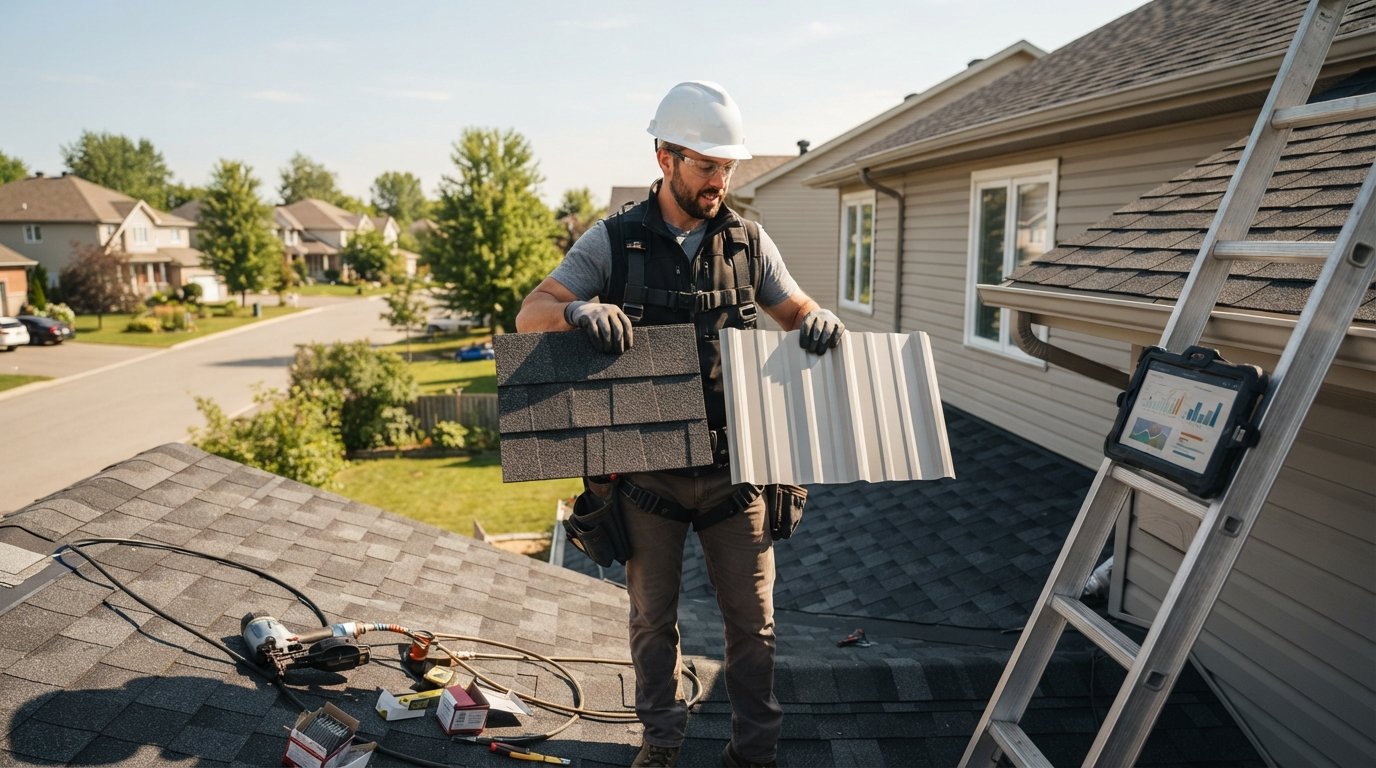
Roofing Material Options Compared for Budget and Lifespan
Compare roofing material options for budget and lifespan, from asphalt to metal and tile. Call 8334393727 to get free local estimates today.

By Sarah Thomas
Learn more about Roof Installation or Replacement for guides, costs, and what to expect.
Compare Roof Installation or Replacement Pros Near You

Enter your ZIP code to compare top-rated local professionals and request free quotes.
Your roof is one of the few home components that must perform every single day, in every season, for decades. When it fails, the consequences reach far beyond a few missing shingles: water intrusion, mold growth, insulation damage, and four-figure repair bills can follow quickly. That is why choosing the right roofing material is one of the highest-stakes decisions a homeowner makes. The challenge is that the market offers more options than ever, and each one carries a different price tag, lifespan, maintenance profile, and curb appeal. Comparing roofing material options for budget and lifespan side by side is the fastest way to separate a smart long-term investment from an expensive mistake.
This guide breaks down the most common roofing materials by upfront cost, expected service life, and real-world trade-offs, so you can match a roof to your budget, your climate, and your plans for the house. You will also learn how installation quality and contractor selection influence whether a roof actually reaches its advertised lifespan, and how to plan the project without draining your savings.
Why Budget and Lifespan Must Be Weighed Together
A roof's sticker price tells only part of the story. The number that matters most is cost per year of service. A material that costs twice as much but lasts three times as long can be the more economical choice over time, while a cheap roof that needs replacement in 12 years may end up costing more in total, especially once you factor in tear-off, disposal, and possible deck repairs on the second installation.
Consider a simplified example. An asphalt shingle roof might run $9,000 and last 20 years, which works out to roughly $450 per year. A metal roof might run $22,000 and last 50 years, or about $440 per year, with far less maintenance along the way. On paper they look similar, but the metal roof delivers decades of protection without repeat replacement projects, and it may lower cooling costs in hot climates. The right answer depends on how long you plan to stay in the home and how much upfront cash you can commit.
Lifespan figures also assume proper installation and normal conditions. A 30-year shingle installed over a poorly ventilated attic in a storm-prone region may fail in 15 years. A metal roof installed by an inexperienced crew can leak at fasteners and seams long before its time. This is why the contractor matters as much as the material: skilled local installers follow manufacturer specifications, which is often what keeps warranties valid. If you are still comparing bids from several trades, our guide on fence installation cost and material options shows how the same material-versus-labor logic plays out in another exterior project.
The Main Roofing Materials and What They Cost
Roofing products fall into a handful of families, each with distinct price ranges. The figures below reflect typical installed costs for an average single-family home, including materials and labor but excluding structural repairs or deck replacement. Regional labor rates, roof pitch, height, and complexity can push costs higher or lower.
- Asphalt shingles (3-tab): roughly $4,500 to $9,000 installed, with a lifespan of 15 to 20 years. The most affordable option and the easiest to repair.
- Architectural asphalt shingles: roughly $8,000 to $15,000 installed, with a lifespan of 25 to 30 years. Thicker, more attractive, and often backed by stronger warranties.
- Metal roofing (standing seam or corrugated): roughly $12,000 to $30,000 installed, with a lifespan of 40 to 70 years. Excellent durability, energy performance, and low maintenance.
- Clay and concrete tile: roughly $15,000 to $35,000 installed, with a lifespan of 40 to 60 years or more. Heavy, fire-resistant, and ideal for warm, dry climates.
- Slate: roughly $25,000 to $60,000 or more installed, with a lifespan of 75 to 100 years. The premium choice for historic and high-end homes.
- Wood shakes and shingles: roughly $12,000 to $25,000 installed, with a lifespan of 25 to 40 years when maintained. Beautiful but demanding in wet climates.
These ranges explain why the same house can receive quotes that differ by tens of thousands of dollars. They also show why it pays to decide early whether you are optimizing for the lowest possible upfront number or the lowest cost over the life of the roof. Most homeowners land somewhere in the middle, choosing architectural shingles for a balance of price and durability, or metal when they plan to stay put for decades.
Asphalt Shingles: The Budget Default
Asphalt shingles cover the majority of North American homes for good reason. They are inexpensive, widely available, quick to install, and simple to patch after storm damage. Three-tab shingles are the entry-level choice, while architectural (dimensional) shingles add texture, weight, and a longer warranty. If your priority is keeping the project affordable right now, asphalt is hard to beat.
The trade-off is longevity. Even quality architectural shingles rarely exceed 30 years in real conditions, and harsh sun, hail, or freeze-thaw cycles can shorten that. Budget for at least one full replacement during a typical 30-year mortgage, and expect minor repairs along the way. Homeowners who choose asphalt often reinvest the savings into insulation or ventilation improvements that extend the roof's practical life.
Metal Roofing: Higher Upfront, Decades of Payback
Metal roofs have moved from barns and outbuildings to mainstream homes, and the reasons are practical: they shed snow and rain, resist fire and rot, reflect heat, and can last 50 years or more. Standing seam panels hide fasteners for a clean look and better leak resistance, while exposed-fastener corrugated panels cost less but require periodic fastener checks.
The main obstacle is the upfront price, which can be two to three times that of asphalt. Homeowners who plan to age in place or pass the home to family often find the math compelling, especially when insurance discounts or energy savings are factored in. Metal also handles extreme weather better than most alternatives, which matters in hail-prone and wildfire-prone regions.
Tile and Slate: Premium Lifespan, Premium Price
Clay tile, concrete tile, and natural slate deliver the longest service lives in residential roofing, often outlasting the home's original owners. Tile suits Mediterranean, Spanish, and Southwestern architecture, while slate complements historic and estate-style homes. Both resist fire, insects, and rot, and both require structural framing that can carry significant weight.
These materials are rarely the budget choice. Installation is labor-intensive, specialized crews are limited, and repairs after a fall or impact can be costly. However, when you calculate cost per year of service, slate and tile can rival mid-range options, and their curb appeal and resale value are difficult to match.
How Lifespan Estimates Can Mislead You
Manufacturer ratings describe ideal conditions, not your roof. Several factors decide whether a material reaches its rated lifespan or falls short, and most of them are within your control during the planning phase.
Ventilation is the most overlooked. A hot, trapped attic bakes shingles from below, causing them to curl and crack years early. Proper intake and exhaust ventilation keeps the deck cooler and extends roof life across every material category. Flashing details around chimneys, skylights, and valleys are the second major factor: most leaks start at transitions, not in the field of shingles. A meticulous installer who replaces worn flashing and seals penetrations correctly adds years to any roof.
Climate and maintenance round out the list. Coastal salt air corrodes fasteners, hail bruises shingles and dents soft metals, and heavy snow loads stress every fastener. Simple habits, such as clearing debris from valleys, trimming overhanging branches, and addressing small leaks immediately, can add five to ten years to a roof's working life regardless of material. If your project involves other exterior upgrades at the same time, coordinating them can save on scaffolding and labor.
Installation Quality and Contractor Selection
The best material in the wrong hands is a liability. Roofing is a system: underlayment, ice and water shield, flashing, ventilation, and fasteners all work together, and skipping or downgrading any layer invites premature failure. This is why comparing quotes on price alone is risky. A low bid often means thinner underlayment, fewer fasteners, or no permit, all of which can void warranties and shorten lifespan.
When you evaluate contractors, ask for proof of licensing and insurance, a written scope that names specific products, and manufacturer certifications that qualify the crew for enhanced warranties. Request references from roofs installed at least five years ago so you can see how the work has held up. Get at least three written estimates on identical scopes so the comparison is apples to apples.
This is also where working with a service that pre-screens local pros pays off. Platforms like BuySellRemodel help homeowners plan affordable improvement projects and connect with experienced local contractors, from free estimates to completed repairs, so you can compare options and move forward with confidence. The few hours spent vetting installers protect a purchase designed to last decades.
A Step-by-Step Framework for Choosing
With costs and lifespans in hand, the decision becomes manageable. Work through the following steps in order, and you will arrive at a material that fits both your wallet and your timeline.
- Set your budget ceiling and timeline. Decide the maximum you can spend now and how long you expect to own the home. Short horizon favors lower upfront cost; long horizon favors durability.
- Assess your climate and roof structure. Heavy snow, hail, salt air, and wildfire risk narrow the field quickly. Confirm your framing can support tile or slate before falling in love with the look.
- Compare cost per year of service. Divide each installed quote by its expected lifespan to see the true annual cost, then weigh maintenance and repair frequency.
- Collect at least three itemized estimates. Insist on identical scopes, product names, and warranty terms so differences reflect value, not hidden shortcuts.
- Verify the contractor, then schedule. Check licensing, insurance, and references, confirm permit responsibility, and lock in a written timeline before work begins.
Following this sequence prevents the two most common regrets: overspending on a material the house cannot support, and saving upfront on an installation that fails early. It also gives you a defensible basis for negotiating with contractors, because you can point to specific products and specifications rather than vague descriptions.
Matching Material to Your Situation
Certain profiles tend to produce satisfied homeowners. If you are budget-focused and plan to move within ten years, architectural asphalt shingles offer the best balance of appearance, warranty, and price. If you intend to stay for decades in a region with harsh weather, metal roofing usually wins on total cost of ownership. If you own a historic or high-end home in a suitable climate, tile or slate preserves character and delivers the longest service life available.
Whatever you choose, treat the roof as a long-term system rather than a one-time purchase. Pair the material with proper ventilation, quality underlayment, and an experienced local installer, and you will get the full lifespan you paid for. Request free estimates from several vetted contractors, compare them line by line, and make the call with confidence.