
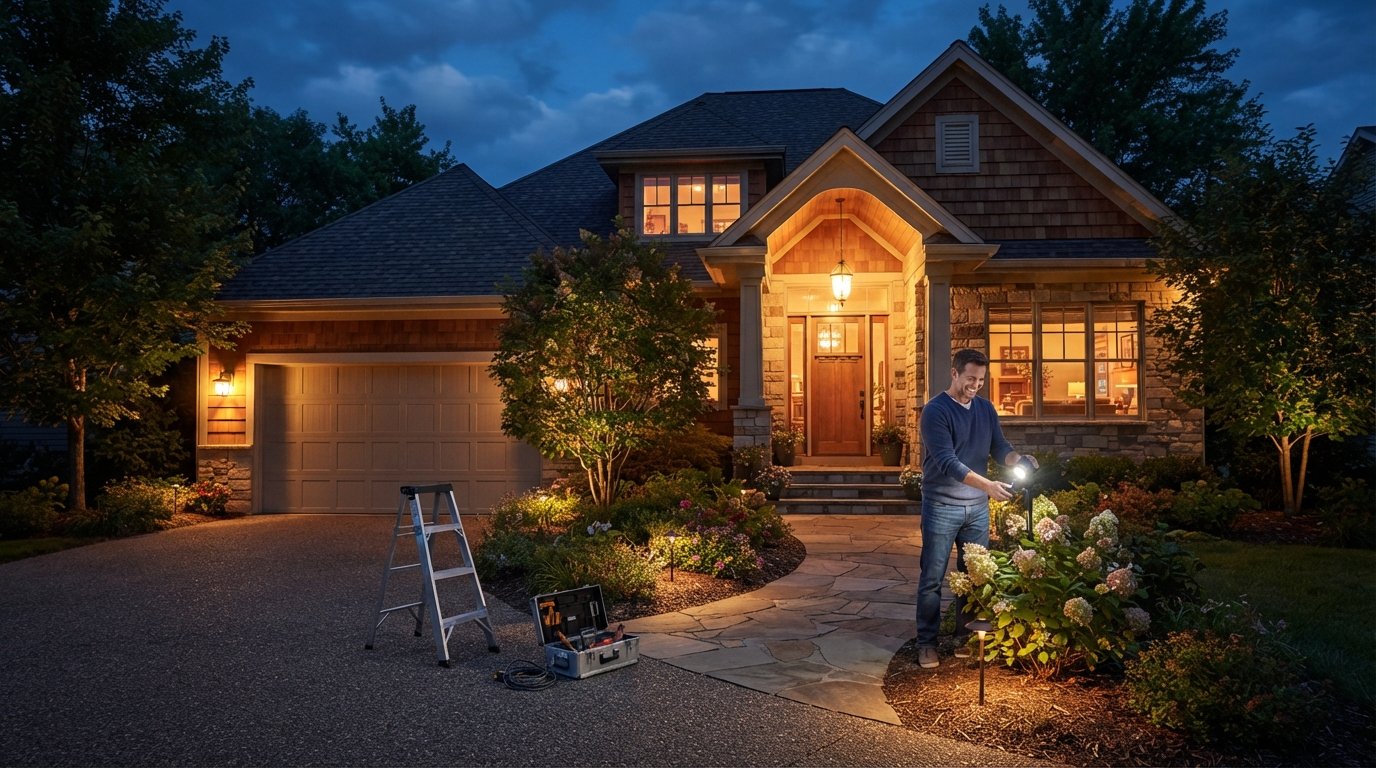
Exterior Lighting for Curb Appeal and Home Security
Boost curb appeal and home security with smart exterior lighting. Call 8334393727 for expert help and free estimates.

By Sarah Thomas
Learn more about Lighting Installation for guides, costs, and what to expect.
Compare Lighting Installation Pros Near You

Enter your ZIP code to compare top-rated local professionals and request free quotes.
A well-lit home does more than look good after dark: it signals pride of ownership, discourages intruders, and prevents costly accidents. Yet many homeowners either leave their porch light burning all night or live in the dark because they assume exterior lighting is expensive or complicated. The truth is that a smart exterior lighting plan can boost curb appeal and home security at the same time, often for less than the cost of a single replacement window. This guide walks you through the best lighting options, placement strategies, energy-saving choices, and budget-friendly installation steps. Whether you are upgrading a single entryway or illuminating an entire property, you will find practical advice here to make your home safer, more attractive, and more valuable. And if you would rather hand the job to a pro, we make it easier to find the right pro and get the job done right.
Why Exterior Lighting Matters More Than Ever
Exterior lighting for curb appeal and home security is one of the highest-return upgrades a homeowner can make. According to real estate professionals, a well-lit exterior can increase perceived home value by 3 to 5 percent, and it dramatically shortens the time a house spends on the market. From a safety standpoint, the FBI reports that most burglaries occur during the day, but homes without exterior lighting are still three times more likely to be targeted at night. Good lighting eliminates dark corners where intruders hide and gives you a clear view of your surroundings when you arrive home after sunset.
Beyond crime prevention, exterior lighting prevents falls and trips on steps, walkways, and driveways. It also extends your outdoor living space into the evening hours, letting you enjoy patios, decks, and gardens long after the sun goes down. The challenge is balancing aesthetics, security, and energy costs. Too much light creates glare and light pollution; too little leaves you vulnerable. The key is a layered approach that combines ambient, task, and accent lighting, each serving a specific purpose.
Many homeowners assume they need to hire an electrician for every fixture. In reality, low-voltage and solar options make DIY installation feasible for most people. But if you want to tie lighting into your home's electrical system, add smart controls, or illuminate a large property, professional help is worth the investment. Later in this article, we will cover when to call a pro and how to get free estimates from local contractors.
Layered Lighting: The Three Essential Types
Professional lighting designers think in layers. For a home exterior, you need three distinct layers: ambient (general illumination), task (focused light for specific activities), and accent (decorative highlights). Each layer contributes to both curb appeal and security.
Ambient lighting provides overall visibility. This includes porch lights, post lights along a driveway, and floodlights that cover broad areas. Ambient light should be bright enough to see clearly but not so harsh that it washes out architectural details. A good rule of thumb is to aim for 1 to 2 foot-candles on walkways and 3 to 5 foot-candles at entry doors.
Task lighting focuses on areas where you need to see details: steps, stairs, door locks, house numbers, and garage entry points. Step lights, deck lights, and well-positioned sconces fall into this category. Task lighting prevents accidents and makes it easy to find your keys or check who is at the door.
Accent lighting is purely aesthetic. It highlights trees, shrubs, walls, and architectural features. Uplights, downlights, and path lights create depth and drama. While accent lighting may not directly deter burglars, it signals that someone cares about the property, which is a surprisingly effective crime deterrent.
When planning your layout, sketch your property on paper and mark where each layer will go. Focus first on entry points and walkways, then add accent lighting as budget allows. This prioritization ensures you get the security benefits immediately while still working toward a polished look.
Best Lighting Fixtures for Curb Appeal and Security
The fixture you choose affects both appearance and performance. Here are the most popular options for homeowners, along with their pros and cons.
- Lantern-style wall sconces: Classic and versatile, these work on either side of a front door or garage. Look for models with seeded glass or metal finishes that match your home's hardware. They provide excellent task lighting for entryways.
- Post lights: Ideal for driveways and long walkways. A 6- to 8-foot post with a lantern head casts a welcoming glow and helps visitors find your home. Solar post lights are a low-cost, no-wiring option.
- Floodlights: Essential for security. Motion-activated floodlights surprise intruders and alert you to activity. Choose LED models with adjustable heads and dual-brightness settings (low for ambient, high for motion).
- Path lights: Stake-mounted fixtures that line walkways and garden beds. They guide guests safely and add a decorative touch. Low-voltage path lights are easy to install and inexpensive to run.
- Step and deck lights: Small, recessed fixtures that illuminate stairs and railings. They prevent falls and add a high-end look to outdoor living areas.
- String lights and bistro lights: Perfect for patios and pergolas. While not security-focused, they extend your outdoor entertaining space and boost curb appeal during evening hours.
For maximum security, combine motion-sensor floodlights at each corner of the house with dusk-to-dawn lanterns at entry doors. This combination ensures you always have some light on, while bright light activates only when someone approaches. Smart bulbs and fixtures let you control schedules, dimming, and color temperature from your phone, which is especially useful for vacation scheduling.
Placement Strategies That Maximize Both Goals
Where you place lights matters as much as what you buy. Poor placement can create glare, shadows, or blind spots that undermine security. Follow these guidelines to get it right.
Entry doors: Place a sconce on each side of the door at about eye level (66 to 72 inches from the ground). If you have only one fixture, put it on the latch side so the light falls on the lock and handle. Avoid placing lights directly above the door, which casts shadows on visitors' faces.
Walkways and steps: Space path lights 6 to 8 feet apart, alternating sides for a balanced look. For steps, use recessed riser lights or small post lights every 3 to 4 feet. Ensure the light washes over the tread, not into your eyes.
Driveways and garages: Mount floodlights on the garage wall or eaves, aimed at the driveway and side yard. A post light near the street helps guests and emergency vehicles find your address. Keep trees and shrubs trimmed so they do not block light or create hiding spots.
Backyards and side yards: These areas are often neglected but are prime entry points for intruders. Use motion-sensor lights on side gates and dark corners. For patios, add ambient lighting from string lights or a fire pit, plus task lighting for grills and prep areas.
House numbers: Make them visible from the street at night. A small spotlight or backlit house number sign helps delivery drivers and first responders. This simple step can save precious minutes in an emergency.
One common mistake is over-lighting. Too many bright fixtures create a prison-yard effect and annoy neighbors. Aim for a warm, welcoming glow (2700K to 3000K color temperature) rather than stark white. Use dimmers or smart controls to adjust brightness for different occasions.
Energy Efficiency and Cost-Saving Options
Exterior lighting does not have to spike your electric bill. Modern LED fixtures use 75 percent less energy than incandescent bulbs and last 15 to 25 times longer. A typical porch light left on 12 hours a day costs about $10 per year with LED versus $40 with incandescent. Multiply that by 10 fixtures and the savings add up quickly.
Solar-powered lights have improved dramatically in recent years. They require no wiring, cost nothing to operate, and install in minutes. The trade-off is lower brightness and performance that varies with weather and season. For path lights and decorative accents, solar is a great choice. For security floodlights, stick with hardwired or battery-backed LED models.
Smart lighting controls offer another layer of savings and convenience. You can schedule lights to turn on at sunset and off at sunrise, dim them to 50 percent after midnight, and trigger motion sensors only when needed. Some systems integrate with security cameras and doorbells, giving you a complete home monitoring solution. If you are considering smart lighting, our guide on smart home lighting installation cost and savings explains how to budget for the upgrade and where to find the best value.
When shopping for fixtures, look for the Energy Star label and check the lumens-per-watt ratio. Higher ratios mean more light for less energy. Also consider fixture durability: powder-coated aluminum and stainless steel resist rust and fading, while plastic housings may crack after a few seasons. Investing in quality fixtures now saves replacement costs later.
DIY Installation vs. Hiring a Professional
Some exterior lighting projects are well within reach for a handy homeowner. Swapping a porch light or staking solar path lights requires only basic tools and an hour of time. But other projects, such as adding new hardwired circuits, installing low-voltage transformers, or wiring smart controls, involve electrical work that can be dangerous if done incorrectly.
Here is a simple decision framework:
- DIY if: You are replacing an existing fixture with a compatible one, installing solar or battery-operated lights, or adding plug-in string lights. These tasks require no new wiring and pose minimal risk.
- Hire a pro if: You need new electrical outlets or circuits, want to install low-voltage landscape lighting with a transformer, or plan to integrate lighting with a smart home system. Licensed electricians ensure code compliance and safety.
- Get multiple quotes if: Your project involves more than three fixtures, requires trenching for underground cable, or includes both lighting and security cameras. Comparing estimates helps you avoid overpaying.
Professional installation for a typical exterior lighting package (6 to 10 fixtures plus transformer and timer) ranges from $1,200 to $3,500 depending on complexity and local labor rates. While that is a significant investment, the safety and performance benefits often justify the cost. Plus, a professional can advise on placement and fixture selection to maximize both curb appeal and security.
If you decide to hire, look for a licensed electrician or a landscape lighting specialist with positive local reviews. Ask for proof of insurance, a written estimate, and a warranty on both labor and materials. Avoid paying the full amount upfront; a deposit of 30 to 50 percent is standard. For more tips on vetting contractors, see our article on how to hire a remodeling contractor without regret. And when you are ready to get quotes, BuySellRemodel can connect you with experienced local pros who offer free estimates and upfront pricing.
Maintenance Tips to Keep Your Lighting Shining
Even the best lighting system needs occasional maintenance. Dust, spider webs, and dead bugs can dim output and make fixtures look neglected. Set a reminder to clean all exterior fixtures twice a year, ideally in spring and fall. Use a microfiber cloth and mild soapy water; avoid abrasive cleaners that scratch lenses.
Check for burned-out bulbs monthly. LED bulbs last for years, but individual diodes can fail. Replace bulbs in matched sets to keep color temperature consistent. If you have solar lights, clean the panels and trim nearby foliage to ensure they charge fully. For low-voltage systems, inspect connections and transformers for corrosion or loose wires.
Adjust timers and smart schedules seasonally. As days get shorter in winter, you may want lights to come on earlier and stay on later. Motion sensors should be tested monthly to confirm they trigger properly. If you notice flickering or dimming, it could indicate a wiring issue that requires professional attention.
Finally, consider upgrading to smart bulbs that send alerts when they burn out or lose connection. Some systems even let you simulate occupancy while you are away, turning lights on and off in a natural pattern. This is one of the most effective ways to deter burglars and give you peace of mind during vacations.
Budgeting for Your Exterior Lighting Project
Costs vary widely based on fixture quality, installation complexity, and whether you hire a pro. Here is a rough breakdown for common scenarios:
- Basic DIY upgrade (4 solar path lights, 2 porch sconces): $150 to $400
- Mid-range hardwired system (8 fixtures, transformer, timer, professional install): $1,500 to $3,000
- High-end smart system (12 fixtures, smart controller, motion sensors, professional install): $3,500 to $7,000
- Security-focused package (4 motion floodlights, 2 entry sconces, wiring): $1,200 to $2,500
These figures are estimates only; your actual cost depends on your home's layout, local labor rates, and the fixtures you select. To get accurate numbers, request free quotes from at least three local contractors. They can assess your property and recommend a plan that fits your budget.
Remember that exterior lighting is an investment that pays you back through lower energy bills, increased home value, and reduced risk of break-ins. Even a modest upgrade can make a noticeable difference in how your home looks and feels after dark.
Bringing It All Together
Exterior lighting for curb appeal and home security is not a luxury; it is a practical upgrade that protects your family and enhances your home's value. By layering ambient, task, and accent light, choosing energy-efficient fixtures, and placing them thoughtfully, you can create a welcoming glow that also keeps intruders at bay. Start with entryways and walkways, then expand to accent and security lighting as your budget allows. If you need help, do not hesitate to call a local pro. With free estimates and expert advice, you can move forward with confidence and enjoy a safer, more beautiful home every night.