
Porch and Deck Staining Cost and How Often to Reseal
Get real porch and deck staining cost and how often to reseal guidance, plus a free local estimate. Call (833)-439-3727 to plan your project today.

Learn more about Deck Staining and Sealing for guides, costs, and what to expect.
Compare Deck Staining and Sealing Pros Near You

Enter your ZIP code to compare top-rated local professionals and request free quotes.
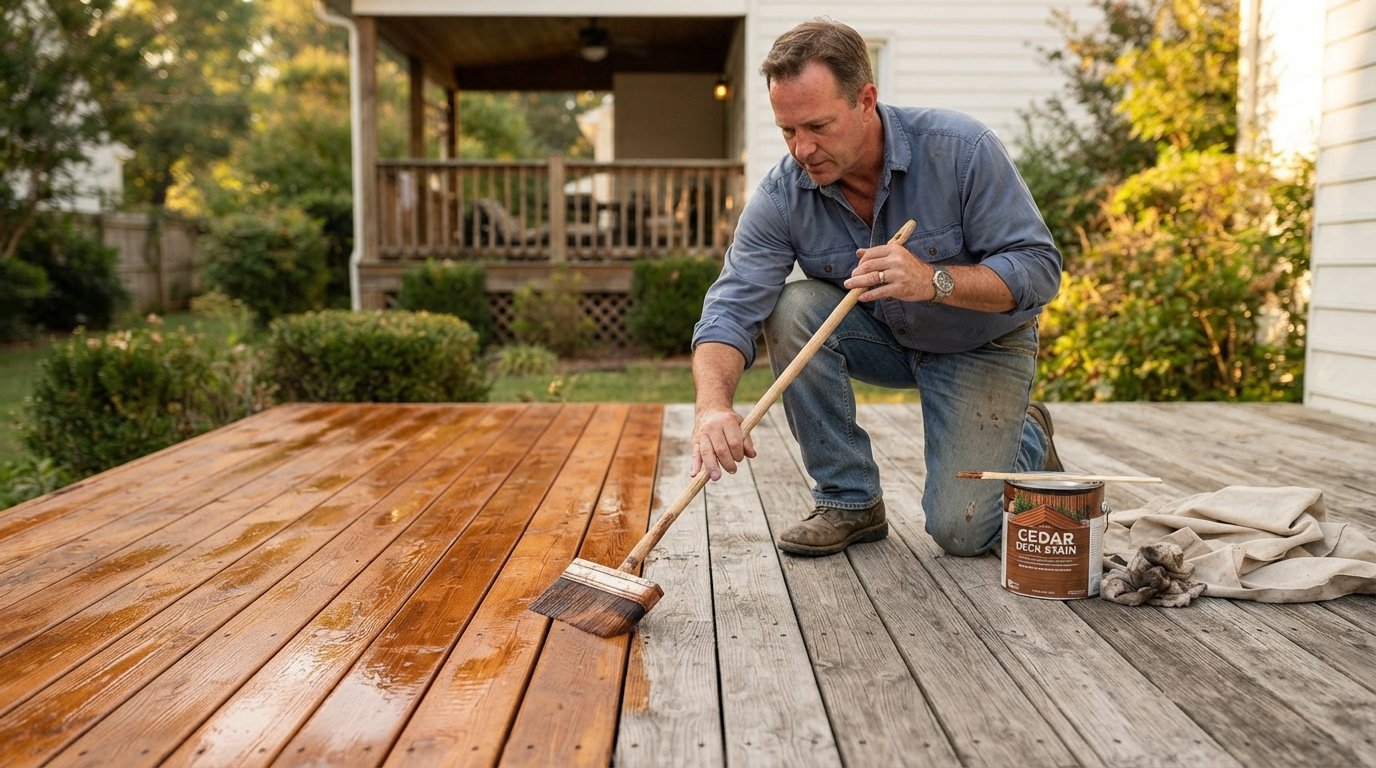
A freshly stained porch or deck transforms your outdoor space from a weathered liability into a welcoming asset, but the price tag and the resealing timeline often catch homeowners off guard. You might be staring at faded boards right now, wondering whether to budget a few hundred dollars for a weekend DIY project or a few thousand for a professional crew. The difference between a stain that lasts two years and one that lasts five often comes down to prep work, product choice, and understanding your wood's exposure to sun and moisture. This guide breaks down real-world costs per square foot, explains the reseal schedule for different wood types and climates, and shows you when repairs must happen before a single drop of stain touches the boards. Whether you are planning a spring refresh or negotiating with a contractor, the numbers and timelines below will help you avoid overspending and prevent premature peeling.
Staining Versus Sealing: What Your Porch or Deck Actually Needs
Homeowners often use "stain" and "seal" interchangeably, but they serve different purposes and come with different price points and lifespans. A sealer is a clear or lightly tinted topcoat that forms a protective film against moisture and UV rays, but it offers little color change and typically requires more frequent reapplication. A stain, by contrast, penetrates the wood fibers or forms a film that adds color, hides minor imperfections, and provides varying levels of UV protection. For a covered porch with minimal sun exposure, a high-quality clear sealer might be sufficient. For an open deck that bakes in afternoon sun, a pigmented stain with UV inhibitors is usually the smarter investment because it shields the wood while adding aesthetic appeal.
The choice also depends on the wood species and its current condition. New pressure-treated lumber needs to dry for several weeks before accepting a stain, while older cedar or mahogany might benefit from a penetrating oil-based stain that enhances natural grain. If your deck has existing paint or a solid-color stain that is peeling, you are facing a stripping job before any new product goes down, which adds labor and cost. Understanding this distinction early prevents the common mistake of applying a sealer over a surface that really needed a pigmented stain, a misstep that leads to premature graying and a frustrating do-over within a year.
Typical Porch and Deck Staining Costs per Square Foot
Professional staining costs generally fall between $2 and $4 per square foot for a basic clean-and-stain job, but that range widens significantly based on surface condition, product type, and regional labor rates. A simple 200-square-foot deck in good condition might cost $400 to $800 for a professional application, while a larger 500-square-foot porch with railings, stairs, and intricate lattice could run $1,500 to $3,000 or more. If you are comparing DIY versus professional options, our DIY vs Professional Deck Staining Cost Comparison breaks down the true savings after factoring in tools, mistakes, and your time.
Several variables push the price higher. Surface preparation is the biggest cost driver: power washing, sanding, and stripping old finish can add $1 to $2 per square foot on their own. Railings, balusters, and steps require hand-brushing and detail work, which slows down the crew and increases labor hours. Two-story decks or porches with limited access may require scaffolding or ladders, adding setup time. Product choice matters too: a premium oil-based stain might cost $40 to $60 per gallon, and a 300-square-foot deck typically needs two to three gallons for two coats. Always request a written estimate that separates prep work, materials, and labor so you can see where the money is going and compare bids fairly.
- Basic clean and stain (good condition, simple layout): $2 to $2.75 per square foot
- Full prep with stripping and sanding (weathered or previously finished): $3.50 to $5 per square foot
- Railings and stairs add-on: $10 to $25 per linear foot or $50 to $150 per staircase
- Premium stain or exotic wood: add 20 to 30 percent to material costs
For a typical 300-square-foot deck with railings, a realistic professional budget is $1,200 to $1,800 when prep and two coats are included. That number can feel steep, but consider the alternative: a failed DIY job that peels within a season often costs more to fix than the original professional quote. If the deck also needs structural repairs, such as replacing rotten boards or tightening loose railings, those fixes should be priced separately before staining begins.
How Often to Reseal a Porch or Deck: Timelines by Wood Type and Exposure
The reseal timeline depends on three factors: wood species, sun exposure, and the type of product used. A cedar deck in full sun with a penetrating oil stain typically needs a refresh every 12 to 18 months, while a covered porch with a high-quality film-forming stain might last three to five years. Pressure-treated pine, the most common deck material, usually falls in the two-to-three-year range when stained with a quality product and maintained with annual cleaning. Hardwoods like ipe or mahogany are denser and more naturally resistant, often stretching to three or four years between recoats.
Geography plays a major role as well. Coastal homes face salt spray and high humidity, which break down finishes faster and often require annual resealing. Homes in arid, high-altitude regions deal with intense UV radiation that fades stain and dries wood fibers, also pushing toward a yearly schedule. The best way to know when your deck needs attention is the water test: splash a cup of water on the surface. If it beads up, the sealer is still working. If it soaks in within a minute, it is time to reseal. You can also watch for graying, fading color, or small cracks, all signs that the protective layer has worn thin.
- Pressure-treated pine: reseal every 2 to 3 years
- Cedar or redwood: reseal every 1 to 2 years in full sun, 2 to 3 years if shaded
- Hardwoods (ipe, mahogany): reseal every 2 to 4 years
- Composite decking: no staining needed, but clean annually; some manufacturers recommend a UV protectant every 2 years
Climate also dictates the best season for application. In most regions, late spring or early fall offers moderate temperatures and lower humidity, allowing the stain to penetrate and cure properly. Avoid applying stain in direct midday sun or when rain is forecast within 24 hours. If you live in a region with harsh winters, resealing in early fall protects the wood from freeze-thaw cycles and moisture intrusion. Keeping a simple log of when you last stained and what product you used removes the guesswork and helps you plan ahead financially.
Prep Work, Cleaning, and Drying Time Before Application
Preparation is where most staining projects succeed or fail, and it is also where many homeowners underestimate the time involved. Before any stain goes down, the surface must be clean, dry, and free of old finish, dirt, mildew, and loose wood fibers. A thorough cleaning with a deck brightener or oxygen bleach removes gray weathering and opens the wood pores. Power washing is common, but it must be done carefully at low pressure to avoid gouging the wood; a fan tip and steady motion work best. If old stain or paint is peeling, chemical strippers or sanding are necessary to get back to bare wood.
Drying time is critical and often overlooked. After power washing, the wood needs 24 to 48 hours of dry weather to reach an acceptable moisture content, typically below 15 percent. New pressure-treated lumber requires a longer curing period, often four to six weeks, before it will accept stain properly. Applying stain to damp wood traps moisture and causes peeling within months. Sanding between coats and after the initial prep smooths raised grain and improves adhesion. Always test a small area first to confirm the product bonds well and the color matches your expectation.
- Clear the deck of furniture and sweep away debris.
- Apply a deck cleaner or brightener and scrub with a stiff brush, then rinse thoroughly.
- Allow the wood to dry for at least 24 to 48 hours, checking moisture with a meter if possible.
- Sand any rough spots and repair cracks or loose boards before staining.
- Apply stain in thin, even coats, back-brushing to work it into the grain, and let it cure per the manufacturer's instructions.
Skipping prep or rushing the dry time is the number one reason DIY stain jobs fail early. A professional crew will factor in these steps and schedule the work around weather, which is part of what you pay for. If you are hiring out, ask how they handle cleaning and drying, and confirm that the quote includes proper prep rather than a quick wash-and-stain.
When Repairs Are Needed Before Staining Makes Sense
Staining over damaged wood is a waste of money and effort. Before any finish is applied, inspect the deck for rotten boards, loose railings, popped nails, and structural soft spots. Press a screwdriver into suspicious areas; if the wood gives easily or crumbles, it needs replacement. Rotten wood will not hold stain and will continue to deteriorate, potentially creating a safety hazard. Similarly, wobbly railings and loose steps should be secured or rebuilt before staining, because fresh stain will not fix structural movement.
Minor cracks and surface checks are normal in older wood and can often be filled with an exterior wood filler before staining. However, large splits or boards that are warped beyond repair should be replaced. If more than 10 to 15 percent of the deck surface is damaged, it may be more cost-effective to replace those boards and then stain the entire deck for a uniform look. Addressing repairs first also gives you a chance to upgrade to more durable materials or improve drainage, which can extend the life of your finish. A reputable contractor will include a repair assessment in the estimate and flag issues before the staining crew arrives, saving you from surprise costs later.
Once repairs are complete and the wood is clean and dry, staining can proceed with confidence. For homeowners who want to compare local professionals and get free estimates on deck staining or repair, BuySellRemodel connects you with experienced contractors who can assess your deck's condition and provide a clear, written quote. Getting two or three bids helps you understand the going rate in your area and avoid overpaying for basic services.
Budgeting for the Long Term: Annualized Cost and Maintenance
Smart homeowners think about staining costs on an annualized basis rather than as a one-time expense. A $1,500 professional stain job that lasts three years costs roughly $500 per year, which is far less than the cost of replacing a deck that rotted because it was never sealed. Compare that to a cheaper $800 job that peels after one season and requires a $1,200 strip-and-recoat the following year, and the value of doing it right becomes clear. Regular maintenance, including annual cleaning and quick touch-ups, extends the life of any finish and delays the next full reseal.
When planning your budget, set aside a small amount each year for deck care, even if you are not ready to reseal. This fund covers cleaning supplies, minor repairs, and eventual professional services. If you are handy, you can handle annual cleaning and spot touch-ups yourself, reserving professional help for full prep and recoating every few years. Keep in mind that the cheapest bid is not always the best value; a contractor who cuts corners on prep may deliver a finish that fails early, costing you more in the long run. Ask for references and photos of past deck projects, and confirm that the estimate includes cleaning, sanding, and two coats of stain.
Ultimately, the porch and deck staining cost and how often to reseal question comes down to protecting your investment. Wood is a living material that responds to its environment, and a consistent maintenance schedule keeps it beautiful and safe. Whether you choose to DIY or hire a pro, understanding the real costs, the reseal timeline for your specific wood and climate, and the importance of prep work puts you in control of your outdoor living budget. Start with a thorough inspection, get a few free estimates from local contractors, and plan your staining project for a dry, moderate season. Your deck will reward you with years of reliable use and curb appeal.