
Preventative Plumbing Maintenance Tips to Avoid Costly Repairs
Preventative plumbing maintenance tips to avoid costly repairs and protect your budget. Call 8334393727 for help finding a local pro.

By Sarah Thomas
Learn more about Plumbing Inspection for guides, costs, and what to expect.
Compare Plumbing Inspection Pros Near You

Enter your ZIP code to compare top-rated local professionals and request free quotes.
A single burst pipe can flood a basement in minutes. A slow, hidden leak behind a wall can rot framing for months before anyone notices. Both scenarios share one thing in common: they were largely preventable. Homeowners who spend a little time on routine plumbing care each season routinely avoid the kind of emergency repair bills that run into the thousands. The good news is that preventative plumbing maintenance is not complicated or expensive. Most of it involves simple habits, a few minutes of inspection, and knowing when to call a professional before a small issue becomes a crisis.
This guide walks through the most effective preventative plumbing maintenance tips to avoid costly repairs, from water heater care to drain habits to seasonal freeze protection. It is written for homeowners who want to protect their investment, keep water bills predictable, and avoid the stress of emergency calls at inconvenient hours. Whether your home is new or decades old, the same principles apply.
Why Preventative Plumbing Maintenance Pays for Itself
Plumbing systems are designed to last, but they are not maintenance-free. Water pressure fluctuates, minerals accumulate, seals dry out, and tree roots creep toward buried lines. Each of these forces works slowly, and the damage they cause is almost always cheaper to prevent than to repair. A ten-dollar washer replaced during a routine check can save the cost of a flooded cabinet, ruined flooring, and mold remediation.
Insurance companies increasingly ask homeowners about maintenance history after a water damage claim. A documented record of annual inspections and timely repairs can support a claim rather than jeopardize it. Beyond insurance, there is the simple math of longevity: a water heater that receives annual flushing can last several years longer than one that is ignored, which delays a major replacement expense.
Preventative maintenance also protects your time. Emergency plumbers charge premium rates for nights, weekends, and holidays. When you plan service during normal business hours, you pay standard rates and can compare multiple quotes instead of accepting whatever price is offered in a panic. That single habit, planning instead of reacting, is the foundation of every tip that follows. Homeowners who take the same disciplined approach to other systems benefit too; our guide on home systems preventative maintenance explains how HVAC, electrical, and plumbing care overlap.
Start With a Whole-Home Plumbing Inspection
Before focusing on individual fixtures, get a baseline picture of your entire system. A whole-home inspection reveals the age of pipes, the condition of shutoff valves, water pressure levels, and any early signs of corrosion or leakage. Many homeowners are surprised to learn their main shutoff valve no longer closes fully, a problem that turns a small leak into a major flood during an emergency.
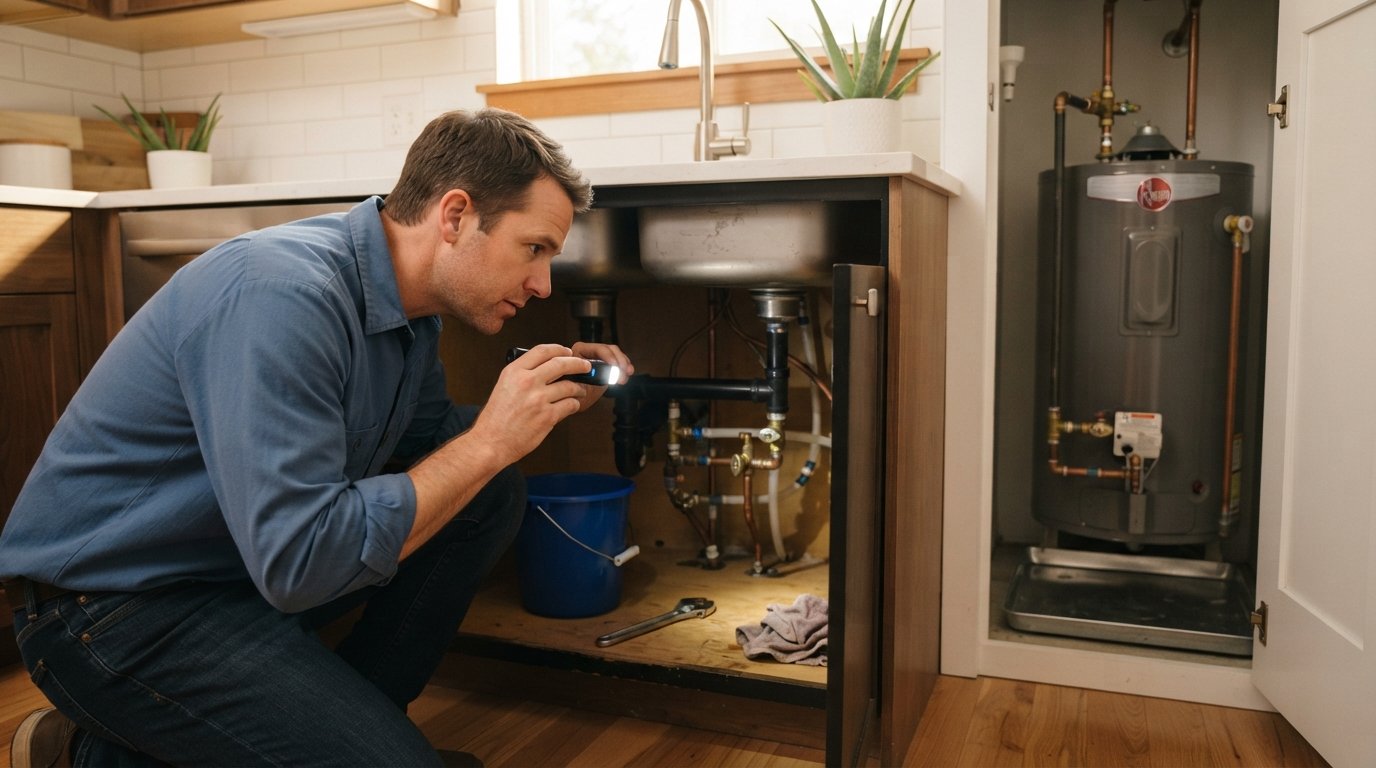
You can perform a basic walkthrough yourself. Start at the water meter, confirm the main shutoff works, then move through the basement, crawlspace, and utility areas checking for moisture, staining, or a musty smell. Look under every sink and behind every toilet. Test the water pressure at an outdoor spigot with an inexpensive gauge; readings above 80 psi stress supply lines and fixtures, while readings below 40 psi may indicate a hidden obstruction.
If anything looks uncertain, bring in a licensed plumber for a professional assessment. The cost of an inspection is minor compared with the cost of a failed supply line. This is also a good moment to locate and label your shutoff valves, so every adult in the household knows how to stop the water quickly. During the inspection, confirm these five essentials:
- Main shutoff valve operates smoothly and closes completely
- No visible corrosion, discoloration, or moisture on exposed pipes
- Water pressure between 40 and 80 psi
- Toilets flush firmly without running or rocking
- No slow drains or gurgling sounds in any fixture
Any item that fails this checklist deserves prompt attention. A wobbling toilet, for example, often means a failing wax ring that is leaking slowly into the subfloor. Fixing it now costs far less than replacing rotten flooring later. If your inspection uncovers a project beyond simple maintenance, such as replacing aging pipes or updating fixtures, it helps to plan the work the same way you would plan any remodel: define the scope, gather estimates, and choose a qualified professional.
Daily and Weekly Habits That Protect Your Drains
Most drain clogs are self-inflicted. Cooking grease, coffee grounds, hair, and wipes are the leading culprits, and each one is easy to keep out of the system. Grease poured down a kitchen drain cools and hardens inside the pipe, gradually narrowing the opening until water backs up. Wipes labeled flushable still do not break down quickly enough for older sewer lines. These habits cost nothing to change and prevent some of the most common and expensive drain repairs.
Adopt a few simple routines. Scrape plates into the trash before washing, pour cooled grease into a container rather than the sink, and use a drain screen in every shower and tub. Once a week, run hot water through each drain for a minute to keep residue moving. Once a month, treat kitchen drains with a enzyme-based cleaner, which digests organic buildup without the corrosive effects of harsh chemical drain openers.
If a drain does slow down, address it immediately rather than waiting for a full blockage. A plunger or a drain snake used early usually clears the problem in minutes. Waiting allows the clog to compact and push deeper into the line, where it may require professional hydro-jetting. The same principle applies to toilets: never flush anything other than waste and toilet paper, and fix a running toilet promptly, since it can waste hundreds of gallons per day and strain your septic system or municipal sewer connection.
Water Heater Maintenance: The Highest-Return Task
Few appliances reward maintenance as generously as the water heater. Sediment settles at the bottom of the tank, where it insulates the burner from the water, forcing the unit to work harder and shortening its life. Annual flushing removes that sediment and keeps the system efficient. On tankless units, descaling plays the same role, removing mineral buildup from the heat exchanger.
To flush a tank water heater, turn off the power or gas, close the cold water inlet, attach a hose to the drain valve, and let the tank empty into a floor drain or outside. Open the inlet briefly to stir remaining sediment, then close the drain, refill the tank, and restore power. If you are not comfortable with these steps, a plumber can perform the service during a routine visit.
While you are near the heater, test the temperature and pressure relief valve by lifting its lever and letting it snap back. If water does not discharge, the valve may be stuck and should be replaced. Also check the anode rod every few years; it sacrifices itself to protect the tank from corrosion, and replacing a worn rod is far cheaper than replacing the entire heater. Setting the thermostat to 120 degrees Fahrenheit reduces scalding risk and slows mineral buildup.
Protect Pipes From Freezing and Pressure Damage
Freezing is the most dramatic plumbing risk in cold climates, but it is not the only one. Even in mild regions, a sudden cold snap can burst exposed pipes in a crawlspace, garage, or exterior wall. The repair often involves cutting out damaged sections, drying the structure, and replacing insulation, a project that can easily run into four figures.
Before winter arrives, insulate pipes in unheated areas with foam sleeves or heat tape. Disconnect garden hoses and shut off outdoor spigots from the inside if your home has separate valves. Seal gaps around pipes where they pass through exterior walls, since cold air flowing through those gaps is a common cause of bursts. On nights when temperatures drop below freezing, let a thin stream of water trickle from the faucet farthest from the main line; moving water freezes far more slowly than still water.
If you leave home for an extended period in winter, keep the thermostat set no lower than 55 degrees Fahrenheit. Better yet, shut off the main water supply and drain the lines. High water pressure is the year-round version of this problem. A pressure-reducing valve installed at the main line keeps stress off every joint and fixture in the house, and it is one of the least expensive upgrades a plumber can make.
Know When to Call a Professional
Some tasks belong in the hands of a licensed plumber, and recognizing the line between DIY and professional help is itself a preventative skill. A homeowner can tighten a faucet, clear a trap, or replace a showerhead. Anything involving the main line, gas connections, sewer lines, or concealed pipes in walls and floors should go to a professional, both for safety and for code compliance.
Watch for warning signs that a hidden problem is developing: water stains on ceilings or walls, a spike in the water bill without a change in usage, unexplained damp spots on the floor, or the smell of sewer gas. Any of these justifies a prompt call. Choosing the right plumber matters as much as making the call. Look for licensed, insured professionals with clear pricing and a willingness to explain the work. Gathering free estimates from several contractors lets you compare scope and cost before committing, the same approach that serves homeowners well on larger renovations.
As you plan maintenance and any needed upgrades, it also helps to think about the bigger picture of your home. Platforms such as BuySellRemodel help homeowners plan affordable improvement projects and connect with experienced local contractors, from free estimates to repairs and upgrades. Combining that planning mindset with routine plumbing care keeps small issues small and keeps your budget under control.
Set a simple schedule and stick to it. Inspect visible pipes and fixtures monthly, flush the water heater annually, test shutoff valves twice a year, and schedule a professional checkup every one to two years. Keep a folder of receipts and service dates, since that record supports insurance claims and helps future buyers trust the home. None of these steps takes much time, yet together they form a reliable shield against the plumbing emergencies that drain bank accounts and disrupt daily life.
Preventative plumbing maintenance is ultimately about control. You decide when a plumber visits, what you pay, and how long your systems last, rather than letting a burst pipe or failed water heater make those decisions for you. Start with one task this week, whether it is testing the main shutoff or scheduling a water heater flush, and build from there. Your pipes, your floors, and your wallet will all be better for it.