
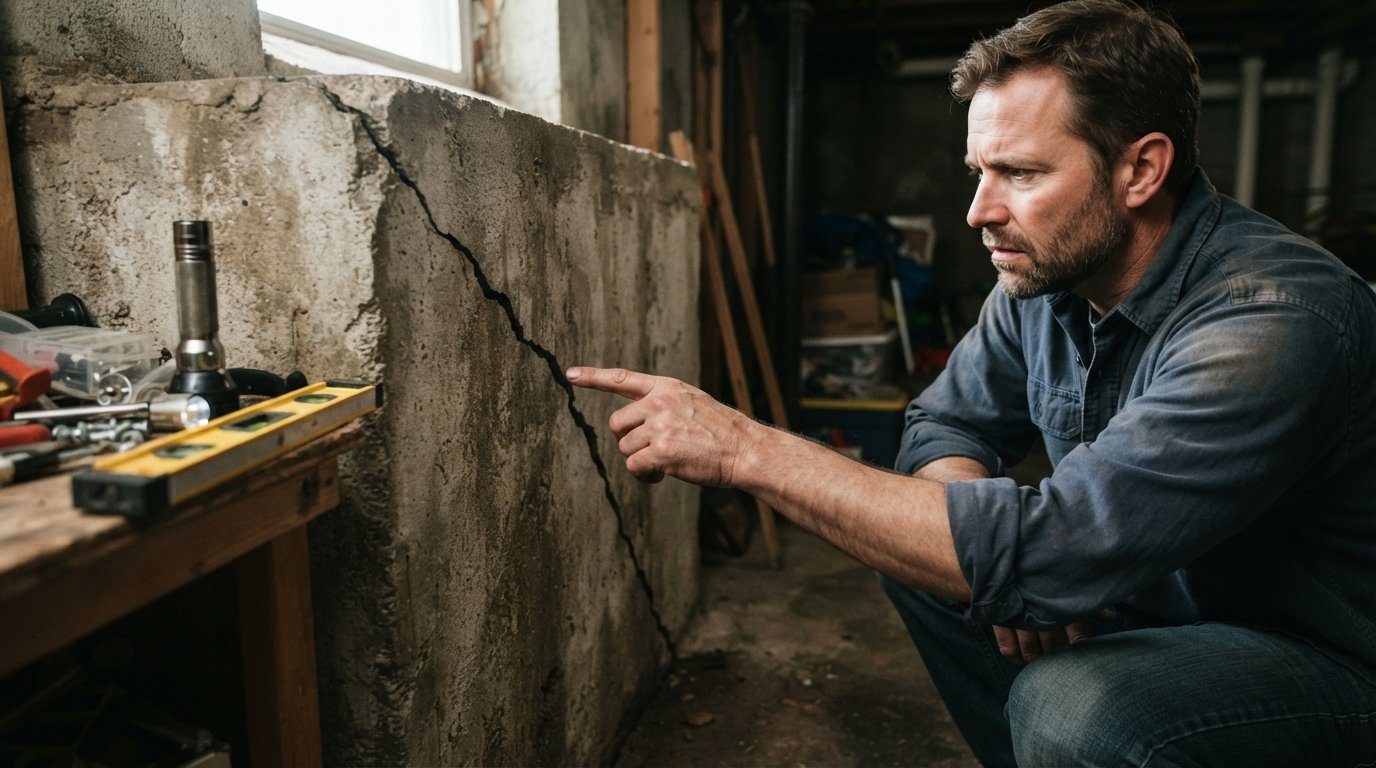
Signs of Foundation Problems Homeowners Should Not Ignore
Spot the signs of foundation problems homeowners should not ignore. Call 8334393727 for expert help and free estimates before small cracks become costly repairs.

By Cameron Howard
Learn more about Foundation Repair for guides, costs, and what to expect.
Compare Foundation Repair Pros Near You

Enter your ZIP code to compare top-rated local professionals and request free quotes.
Your home is likely your largest investment, and its foundation is the one structural element holding everything together. When the foundation begins to fail, the warning signs rarely appear overnight. Instead, they show up as subtle cracks, sticking doors, or uneven floors that many homeowners dismiss as normal settling. Ignoring these early indicators can lead to repair costs that climb into the tens of thousands of dollars, along with diminished property value and serious safety concerns. Understanding the signs of foundation problems homeowners should not ignore is the first step toward protecting your home, your budget, and your peace of mind.
Why Foundation Problems Get Worse Over Time
Foundations fail for several reasons: soil movement from moisture changes, poor drainage, tree roots, inadequate construction, or simply the natural aging of materials. Whatever the cause, the underlying issue rarely corrects itself. Water that pools near the base of your home can erode or expand the soil, shifting the foundation a fraction of an inch at a time. Over months and years, those tiny shifts become structural damage that affects the entire house.
The financial side matters just as much. A minor crack that could be sealed for a few hundred dollars can evolve into a wall bowing inward, a chimney separating from the structure, or a floor that sags enough to crack tile and tear drywall. Homeowners who act on early warning signs consistently spend far less than those who wait until the problem is visible from across the street.
Foundation repair also protects your ability to sell. Most buyers order a professional inspection, and foundation defects are among the most common deal-breakers. Addressing issues early keeps your home marketable and your negotiation position strong.
The Warning Signs You Should Never Overlook
Some foundation symptoms are obvious, while others hide in plain sight. The key is knowing what to look for in every part of your home, from the basement to the second floor. The following signs of foundation problems homeowners should not ignore are the ones that professionals treat as red flags.
- Stair-step cracks in brick or block walls: These zigzag patterns in masonry usually indicate differential settlement, where one part of the foundation is sinking faster than another.
- Doors and windows that stick or will not latch: When the frame of your home shifts, openings go out of square, making doors drag and windows difficult to open.
- Uneven or sloping floors: A floor that visibly slopes toward the center of the house or feels spongy underfoot often points to foundation movement or floor joist damage.
- Cracks in drywall, especially near corners of doorways: Diagonal cracks radiating from the top corners of doors and windows are classic indicators of shifting.
- Gaps around exterior doors and windows: If daylight shows through or you can feel drafts, the exterior wall may be pulling away from the frame.
- Separation between the chimney and the house: A visible gap or leaning chimney is a serious structural warning that should be evaluated immediately.
- Bowing or leaning basement walls: Horizontal cracks and inward movement in basement walls signal soil pressure that needs professional attention.
- Persistent moisture or mold in the basement or crawl space: Chronic dampness can weaken concrete and wood, accelerating foundation deterioration.
One or two of these signs on their own might have a harmless explanation. Several appearing together, or any single sign that worsens over time, strongly suggests a foundation issue that deserves a professional inspection. If you are also planning upgrades such as a tankless water heater installation, addressing foundation concerns first ensures your new investment rests on stable ground.
What Each Sign Actually Means for Your Home
Cracks: Not All Are Equal
Hairline cracks in drywall or plaster are common and often cosmetic, especially in newer homes where materials settle during the first year. The cracks that matter run diagonally, appear near door and window corners, or widen over time. In masonry, horizontal cracks in a foundation wall are serious because they indicate lateral pressure from soil or water. Vertical cracks can also be problematic if they exceed roughly a quarter inch in width or show signs of moisture seepage.
A simple way to monitor a crack is to mark its ends with a pencil and date the marks. If the crack extends beyond your marks within a few months, the movement is active and requires evaluation.
Sticking Doors and Windows
Seasonal sticking is normal in many climates as wood expands and contracts with humidity. The warning sign is a door or window that sticks year-round, gets progressively worse, or will not close at all. This happens when the foundation shifts and distorts the framing around the opening. Checking multiple openings in different rooms helps you determine whether the problem is isolated or structural.
Uneven Floors
Floors can slope for reasons unrelated to the foundation, such as sagging joists or a poorly leveled subfloor. However, when a floor slopes noticeably toward an exterior wall or the center of the home, and especially when it is accompanied by cracks in nearby walls, foundation settlement is a likely culprit. A marble or ball placed on the floor can give you a quick read on the direction and severity of the slope.
When to Call a Professional Immediately
Some situations cannot wait for a weekend project or a second opinion. Contact a licensed foundation or structural professional right away if you notice any of the following:
- A chimney that is visibly leaning or separating from the house.
- Basement walls that are bowing inward with horizontal cracks.
- Floors that feel spongy, bounce excessively, or sag more than an inch across a room.
- Doors or windows that suddenly stop closing, especially after heavy rain.
- New cracks that appear and widen within weeks.
These conditions can compromise the structural integrity of your home and, in severe cases, create safety hazards. A qualified contractor can assess the damage, explain the underlying cause, and outline repair options with transparent pricing. Many homeowners are surprised to learn that early intervention often costs a fraction of what full-scale foundation repair requires later.
How to Document Symptoms Before Your Inspection
Walking into an inspection with clear documentation helps contractors diagnose the problem faster and gives you a stronger basis for comparing bids. Before you call anyone, take a systematic tour of your home and record what you find.
Start in the basement or crawl space. Note any cracks in the foundation walls or floor, signs of water intrusion, efflorescence (the white powdery deposit left by moisture), and any bowing or leaning. Photograph each issue with a ruler or coin for scale. Next, move through the living areas and check every door and window for sticking, gaps, or difficulty latching. In upstairs rooms, look at ceiling and wall corners for cracks, and place a level or marble on floors to detect slopes.
Outside, inspect the perimeter for cracks in the foundation, gaps between the house and attached structures, and soil that slopes toward the home rather than away from it. Also check gutters and downspouts: water discharged too close to the foundation is one of the most common and preventable causes of soil movement. A simple written list with dates and photos gives any contractor a clear picture and helps you track whether conditions are getting worse.
What Foundation Repair Typically Involves
Repair methods vary based on the cause and severity of the damage. Common approaches include underpinning with piers or helical anchors to stabilize and sometimes lift the foundation, carbon fiber straps or steel braces to reinforce bowing walls, and epoxy or polyurethane injection to seal cracks and fill voids. In less severe cases, improving drainage, regrading the soil, and extending downspouts may be enough to stop further movement.
Costs range widely depending on the method and the extent of the damage. Minor crack sealing might cost a few hundred dollars, while major underpinning projects can run into five figures. Because foundation work is specialized, it pays to gather multiple estimates and ask each contractor to explain the cause of the problem, not just the repair. You can explore how to plan and budget for this type of project through resources like BuySellRemodel's free estimate tools, which help homeowners compare local professionals and understand pricing before committing.
Preventing Future Foundation Damage
Once repairs are complete, prevention becomes the priority. Most foundation problems stem from water management, so keeping moisture consistent around your home is essential. Maintain gutters and downspouts, make sure the ground slopes away from the foundation at a rate of about six inches over the first ten feet, and avoid overwatering plants near the house. In regions with expansive clay soil, consistent watering during dry spells can reduce the swelling and shrinking that cracks foundations.
Tree roots deserve special attention. Large trees planted within ten to fifteen feet of the foundation can draw moisture from the soil beneath the footings, causing settlement. Root barriers or careful landscaping can mitigate the risk. Finally, schedule a periodic foundation check as part of your seasonal home maintenance routine, ideally before and after the wettest season in your area. Catching a small crack early is almost always cheaper than repairing structural damage later.
Foundation problems are one of the few home issues that genuinely get worse when ignored. The signs are often subtle at first, which is exactly why they are so easy to dismiss. By learning to recognize the early warnings, documenting changes, and calling a qualified professional when something looks wrong, you protect both the structure and the value of your home. If you have noticed any of the signs covered here, request a free estimate from a local foundation specialist and get a clear picture of what is happening beneath your floors before a small issue becomes a major expense.